
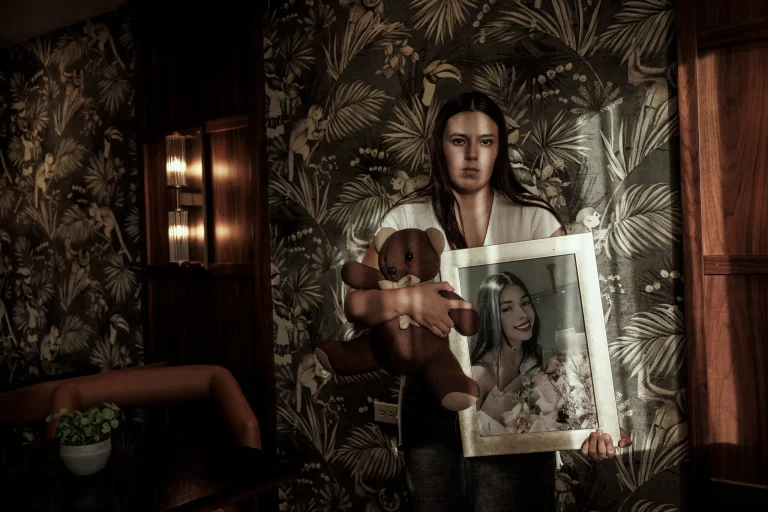
It has been nearly a year since her younger sister, Cecilia, disappeared, and Nadia Berrelleza can barely sleep. Instead, she spends her nights searching for leads, retracing Cecilia’s last movements and scrutinizing messages, photos and videos that claim to reveal her fate.
One image she received showed a young woman with long, black, curly hair — just like Cecilia’s — kneeling and blindfolded, her hands tied, surrounded by armed men.
Investigators said the image had been generated by Artificial Intelligence.
Another video sent on Facebook showed a woman being sexually assaulted.
The sender demanded a ransom.
“I know her face perfectly; I would never have believed it was her,” Nadia Berrelleza said.
“But it’s still so horrible to see this.”
Cecilia Berrelleza, 31, disappeared in July 2025 after going to lunch with her friends in Mazatlan, a coastal city in the Mexican state of Sinaloa.
Since then, Nadia has appealed to authorities and the public, even offering her car in desperation as a reward for her sister’s return.
The attention, she said, has brought a flood of information, but also opportunists trying to extort money from her with false claims about Cecilia’s fate.
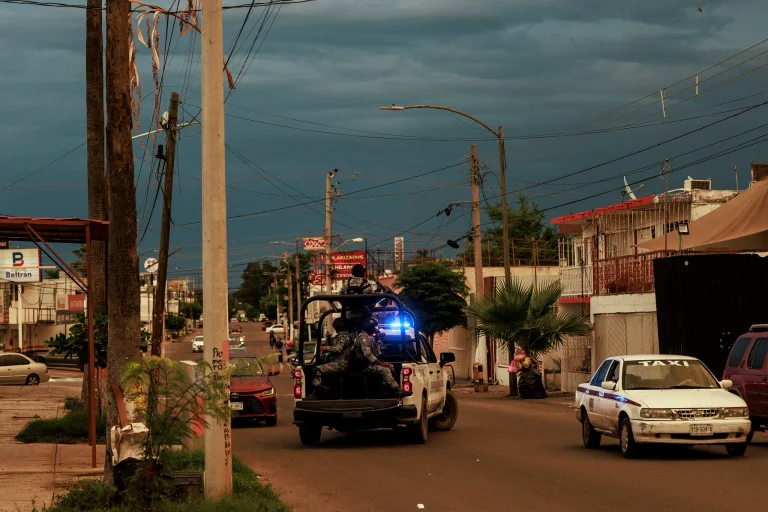
The disappearance is part of a wave of violence that has made the state of Sinaloa the most dangerous place in the country for women.
It also coincides with a cartel war between two factions of the Sinaloa Cartel that has weakened security and terrorized the state for two years.
The clashes have become so commonplace that the lines between domestic violence, gender-based violence and cartel retaliation often overlap.
Last year, 105 women were killed in Sinaloa, the highest toll in 14 years and nearly double the total from the previous year, while another 299 disappeared.
73 of those killings were investigated as femicides, the term for gender-motivated killings. By July, Sinaloa was again leading the country in killings of women, while 153 women had disappeared.
Across the state, women are killed by their husbands or partners inside their own homes.
Girls are deliberately shot in broad daylight or caught in the crossfire as armed members of rival factions wage war.
Some disappear.
Others are abducted, tortured and found in clandestine graves, or are never found at all.
Most of these deaths and disappearances remain unsolved, experts say, with investigators overwhelmed by the cartel war and struggling to keep up. Lydia Ojeda, a researcher at the Autonomous University of Sinaloa who studies femicides, found in an analysis that only 8 percent of all femicide cases between 2015 and 2026 resulted in a conviction.
That figure reflects a broader crisis in Mexico, where about 95 percent of violent crimes, including killings, remain unsolved, according to research groups.
This impunity often pushes relatives to become investigators, detectives and search groups themselves, a dangerous undertaking.
Once, after receiving a tip that Cecilia was being forced to work for the cartel, Ms. Berrelleza said she had driven to a ranch outside Mazatlan disguised as a man, only to find herself surrounded by armed guards on motorcycles. She left immediately.
Another time, after hearing that her sister was being held in a safe house, Berrelleza said she had disguised herself, pushing a cart and pretending to talk to herself as she investigated the house.
Police later raided the house and found weapons and drugs, but no sign of Cecilia, Berrelleza said.
“This is a snake pit,” she said. “The good guys are outnumbered by the bad guys, and the good guys and the authorities are afraid. No one can really help us.”
Berrelleza has developed a theory about what happened to her sister.
On the day she disappeared, Cecilia went to lunch with three friends. One of them later drove the group to her boyfriend’s house, according to Berrelleza, where street cameras recorded Cecilia and another of the friends being handcuffed and taken away in a car.
Berrelleza said she believes the woman who took Cecilia was working for one of the Sinaloa Cartel’s factions.
She believes the woman recruited young girls with promises of luxury, travel and money, before handing some of them over to cartel members for sexual exploitation. But this woman is not being investigated as a suspect. According to the case file, she claims she was also abducted and released after three days.
Local police and the Sinaloa attorney general’s office both declined to comment on the case.
The circumstances surrounding Cecilia’s disappearance remain unclear. But her sister’s account shows how women are increasingly being drawn into the cartel underworld as recruiters, couriers or accomplices, while also becoming targets, sometimes blurring the line between victim and perpetrator.
Researchers and women’s rights advocates say Mexico’s broader security crisis has pushed violence against women down the state’s list of priorities, creating more opportunities for abusers to act with greater impunity and leaving victims with fewer places to seek help.
“It’s a perfect storm that turns women into easy prey,” Ojeda said. “Whether the aggressor is a cartel member or an ex-husband, the conditions are always the same: impunity, institutional neglect and a society gripped by violence.”
I interviewed Ojeda last month in Culiacán, the capital of Sinaloa.
At exactly the same time, an armed man approached a 23-year-old woman who was sitting outside a flower shop on the other side of the city and shot her in the head.
Similar incidents happen routinely throughout the city.
In March 2025, 26-year-old Vivian Karely Aispuro went to a party with her sister and friends. She never made it home. Seventeen days later, Vivian’s body was found on a dirt road in Culiacán.
Her family members say they believe a female acquaintance drugged Vivian and took her to the home of her ex-boyfriend, who has been accused of killing her. Prosecutors say he struck her in the face with a beer glass and left her to bleed to death.
Her family says authorities never investigated the woman as a possible accomplice, even though they told police that the woman returned Vivian’s freshly laundered clothes to them several days after her disappearance, claiming that Vivian had insisted on seeing her ex-boyfriend.
The attorney general’s office in Culiacán declined to comment.
Vivian’s sister, Alma Daniela, said her sister slowly changed during her relationship with her killer — a man who was also accused of killing a woman in Las Vegas. Vivian became withdrawn, anxious and insecure about her appearance, undergoing cosmetic procedures, barely eating and living in constant fear.
“Her relationship with him changed her completely,” Alma Daniela said.
“The things she once liked about herself and her body, she began to hate.”
In the bloody cartel war that has claimed more than 4,000 lives in Sinaloa, women have become strategic assets and strategic targets, the New York Times writes.
Interviews with four members of the Sinaloa Cartel — three men and one woman — from rival factions revealed some of the reasons behind the rise in killings and disappearances of women. Speaking anonymously because of the illegal nature of their activities, they described an organization gripped by suspicion as it faced an intensified government crackdown.
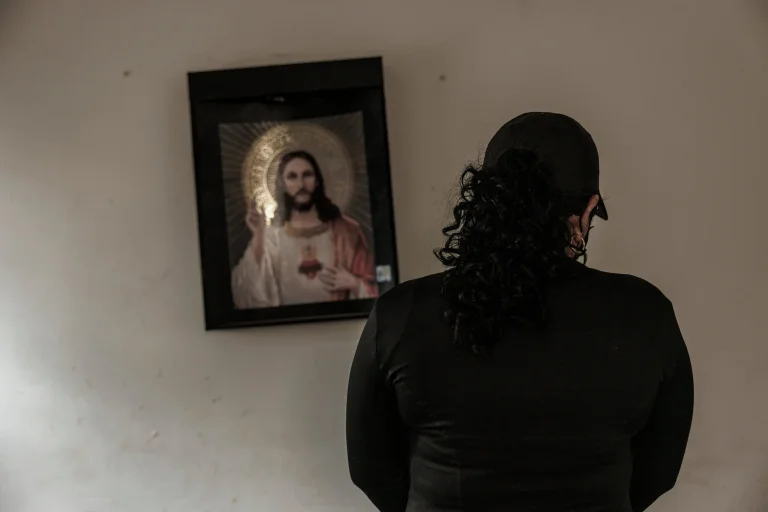
In that climate, they said, women have become targets because of what they know.
Their relationships with boyfriends, husbands, brothers, bosses and friends have long given them access to the cartel’s most sensitive information: where senior operatives hide, which safe houses they use, where weapons and drugs are stored and how money is laundered, a senior operative said.
Now, the four operatives said, women in Sinaloa are increasingly being abducted on suspicion of sharing that information with authorities or rival factions.
Others are targeted because they dated the wrong man, remained friends with the girlfriend of a suspected trafficker, or even turned down a cartel member’s romantic advances, the operatives said.
Earlier this year, Nemesio Oseguera Cervantes, the leader of a rival cartel called the Jalisco New Generation Cartel, was found after intelligence officials tracked his girlfriend to his safe house.
He was killed in a shootout with Mexican security forces.
Before the cartel war, women mostly laundered money, relayed messages or guarded drugs and weapons. But as hundreds of armed men have been killed or arrested, women are now filling positions once reserved for men. They now organize kidnappings, oversee investigations and sometimes carry out killings themselves, according to two cartel operatives, including a 40-year-old woman who distributes payroll for cartel operatives in Culiacán.
Rival factions also abduct, kill or disappear the wives, girlfriends, sisters and mothers of their enemies as revenge or to send a message, the female operative said. Other women, she added, are killed simply because they saw or heard something.
Before the war, the female operative said she had owned a nail salon. After violence destroyed her business, she began helping her partner transport drugs and weapons into the city, before joining the cartel full time.
“If you’re a woman driving with a child inside, they don’t search you,” she said. “The police or the army just wave you through.”
The pervasive presence of cartel-linked femicides in Sinaloa has also led some criminals to imitate cartel violence to misdirect investigators.
Just before New Year’s in 2024, Barbara Yáñez Uriarte and her 5-year-old son, Dante, were killed in their home. According to prosecutors, Dante’s estranged father came to the house and brutally stabbed Barbara and Dante repeatedly, then left their bodies under the Christmas tree and set the house on fire.
Barbara’s mother, Lucero Uriarte, said investigators had initially suspected a connection to organized crime because setting fire to a house was a common cartel tactic. The suspect remains in custody, but has yet to face trial, according to court records.
“He killed my daughter, he killed my grandson,” Lucero said quietly, sitting in the burned-out living room. “And he killed me, too. I’m already dead in life.”








