
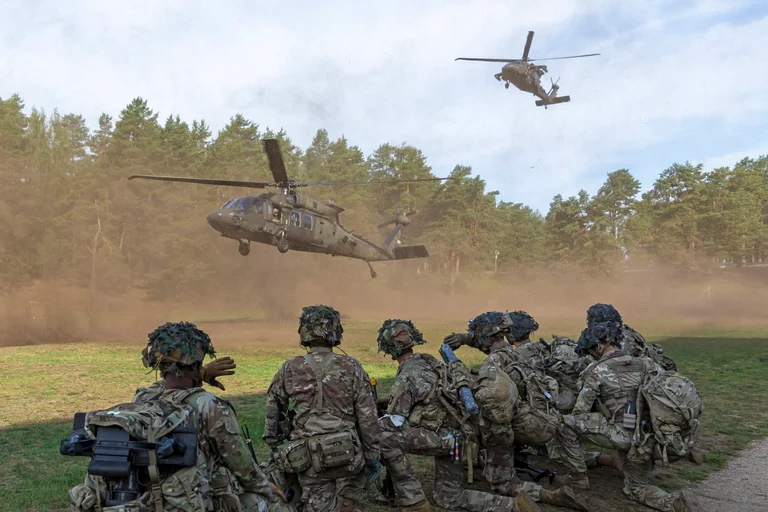
The Pentagon is considering withdrawing around 25,000 or more U.S. troops from Europe, a move that could potentially reduce the U.S. military presence on the continent by nearly a third, NBC News reported Thursday.
The proposed withdrawal could be even larger, reaching up to 40,000 troops, NBC reported, citing current and former U.S. and Western officials familiar with the discussions. Around 80,000 U.S. troops are currently stationed in Europe.
According to the report, no final decision has yet been made.
Germany, Italy and Spain, which host some of the largest U.S. deployments in Europe, are among the countries that could be affected.
The options under consideration are part of a six-month Pentagon review of the U.S. military presence in Europe.
General Alexus Grynkewich, who leads U.S. European Command and serves as NATO's Supreme Allied Commander Europe, is expected to present an initial analysis to Defense Secretary Pete Hegseth on Friday, NBC reported.
The assessment is expected to include several options relating to air, naval and ground forces, as well as the possibility of repositioning some U.S. forces toward NATO's eastern flank.
According to the report, Hegseth is expected to receive the final recommendation on November 6, before any proposal is presented to President Donald Trump.
The Trump administration has long argued that European countries should assume greater responsibility for their conventional defense, while the U.S. focuses additional military resources on other regions.
Potential reductions have caused concern among some European lawmakers and governments, which have warned that a rapid withdrawal could affect NATO's ability to deter Russia.
NBC also reported that the State Department and the Pentagon have disagreed over the review process.
Secretary of State Marco Rubio reportedly intervened in June after the Pentagon had prepared a briefing for NATO defense ministers on potential large-scale reductions.
The report comes as U.S. senators have separately urged Rubio to ensure the full involvement of the State Department and U.S. diplomats in the review of U.S. force deployments.








