
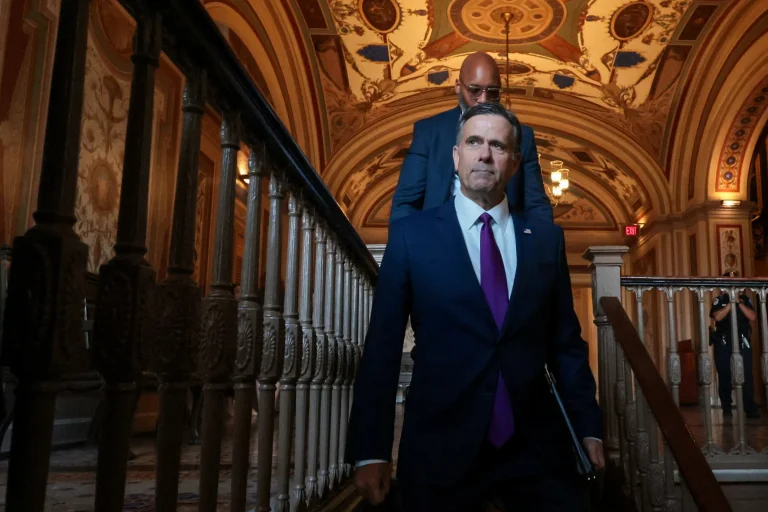
CIA Director John Ratcliffe warned Russian officials in Moscow this week not to escalate the conflict with America’s NATO allies, particularly Estonia, Latvia and Lithuania, Politico writes.
The U.S. intelligence chief also used the rare, unannounced trip to the Russian capital on Tuesday to pressure Russia to reduce its military and economic support for Iran, Politico reports, citing officials who were familiar with Ratcliffe’s visit and talks in Moscow.
News of Ratcliffe’s trip to Russia, which the administration did not officially acknowledge until this morning, prompted widespread speculation in Washington and Europe, as it marked the first such known trip to the Russian capital by a CIA director under President Donald Trump.
In late 2021, President Joe Biden’s then-intelligence chief, Bill Burns, warned Russian President Vladimir Putin against invading Ukraine. Russian forces crossed the border and attacked three months later.
Ratcliffe’s visit comes as Russia and Ukraine have exchanged a series of intensified drone and missile attacks miles beyond the war’s front lines.
Russia has also made a series of threats in recent weeks against NATO countries that support Ukraine, fueling fears that Moscow could undertake new aggressive hybrid warfare measures or limited military action against NATO allies, including the United Kingdom.
“His meeting was primarily intended to warn Russia against any escalatory action against the Baltic states,” said the first person familiar with the matter.
In a radio interview Wednesday morning, Trump denied speculation that Ratcliffe made the trip to persuade Putin not to test NATO’s resolve or attack the United Kingdom, which this week pledged to double its support for Ukraine.
Trump called the visit “semi-routine” but acknowledged that it was about ending the war. “I don’t want to disappoint people. We would like to see the war with Ukraine end,” he said.
The CIA did not respond to a request for comment.
Under the NATO treaty, an armed attack against one member is considered an attack against all members. But for years, Russia has used a range of tactics short of open warfare—including sabotage operations and cyberattacks—to undermine U.S. allies in Europe without provoking a broader retaliation.
The C-17 military aircraft that took Ratcliffe to Moscow departed from Latvia, according to publicly available flight-tracking data.
Spokespersons for the Estonian and Lithuanian embassies did not comment.
On Monday, Treasury Secretary Scott Bessent threatened a significant expansion of sanctions against countries that refuse to cut economic ties with Iran.
Ratcliffe also raised this issue with Russian officials, according to the first person and the British official. He conveyed the desire for Moscow to stop sharing weapons and defense technology with Iran and advised Moscow against “overreacting” if it is affected by sanctions, the British official said.
Russia has reportedly sent materials to Iran to bolster its drone arsenal and may be helping Tehran identify targets for attacks against U.S. facilities in the Middle East.
Since his first term, Trump has repeatedly clashed with the U.S. intelligence community over issues related to Russia, at times appearing to echo Kremlin rhetoric about NATO or offering more optimistic assessments of Putin than those supported by his intelligence agencies.
However, Trump has grown somewhat cooler toward Putin as he struggles to end the war. Meanwhile, Ratcliffe is generally seen as a hard-liner on Russia.
The Moscow visit is the latest example of Trump turning to his CIA director to help navigate high-stakes diplomatic negotiations with a major U.S. adversary.
Ratcliffe also secretly traveled to Cuba this May to warn the country’s communist regime to make sweeping reforms or risk a U.S. pressure campaign.
Although lawmakers were largely unaware of the trip, Senator James Lankford said Tuesday that he welcomed the initiative.
“Things don’t get better by not talking,” Lankford told Politico shortly after a trip to Ukraine. “Right now, Russia doesn’t seem focused on trying to resolve anything. But we need to be able to find out what their ultimate goal is,” he said.








