
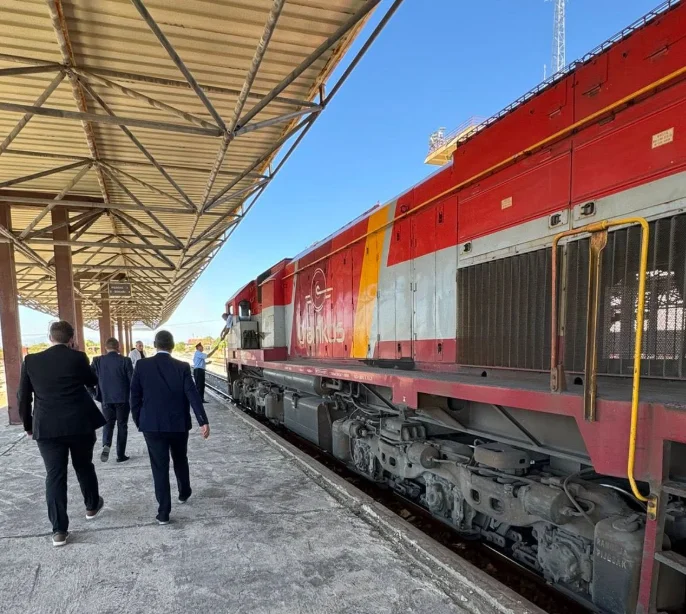
“Profitech Sh.P.K.”, the company that won the 423-thousand-euro tender to repair five railcars and later sent them to Serbia, has continued to win several other tenders from TrainKos, an enterprise operating under the Ministry of Economy.
The latest tender it won was just a few days ago, on August 17, worth around 26 thousand 900 euros, for the supply of equipment and spare parts and the maintenance of rolling stock.
Before that, in July 2026, it won a tender worth around 18 thousand 600 euros to supply locomotive brake shoes.
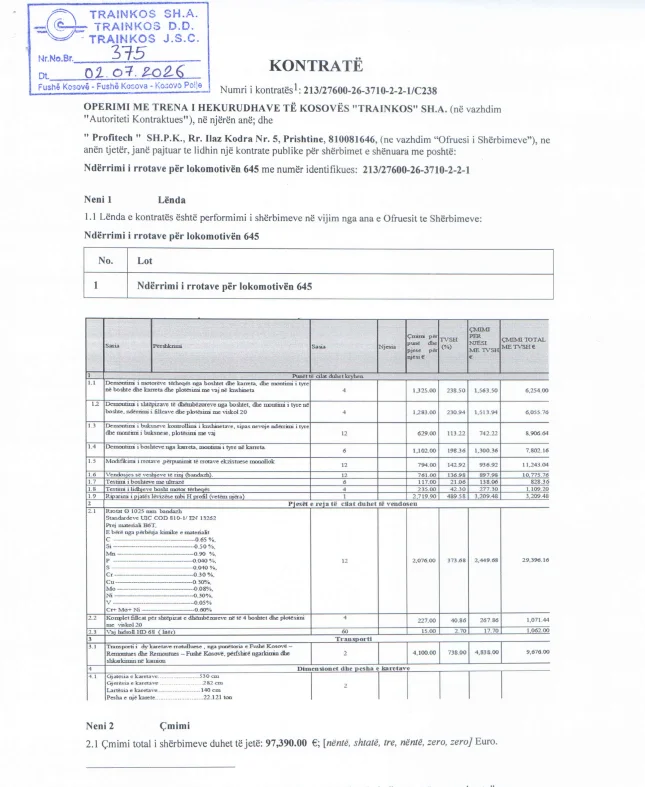
“Profitech” also won a tender to replace the wheels of a locomotive in July 2026, worth 97 thousand 390 euros.
In November 2025, it secured a tender worth around 16 thousand euros to supply batteries for railcars.
In May 2025, “Profitech” won a tender worth around 6 thousand 400 euros to supply control modules for locomotives.
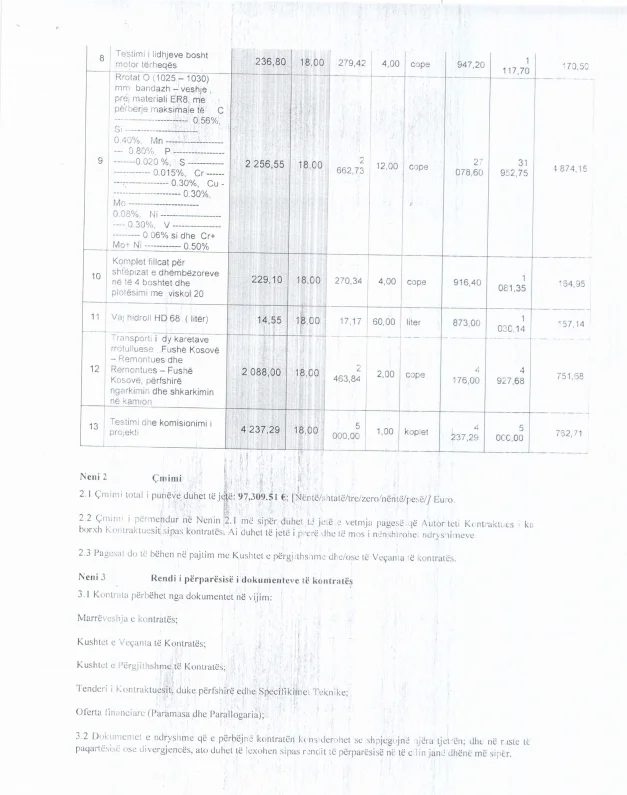
In May 2025, it also won another tender from TrainKos, worth 97 thousand euros, to replace the wheels of a locomotive.
Meanwhile, in November 2024, it received 14 thousand 400 euros to supply equipment and spare parts.
The contract to repair the railcars in Serbia was awarded to “Profitech” in May 2024, a few months after the attack in Banjska by Serbian terrorists, led by the criminal Milan Radojçiq and closely tied to the authorities in Belgrade.
When these railcars were put into service in July 2026, Minister Rizvanolli presented them with great fanfare. But she concealed where they had been repaired.
A TrainKos employee, Asdren Ademi, commented on her Facebook post, asking them to “tell the people that they were repaired in Serbia”.
TrainKos chief executive Agron Statovci immediately began disciplinary measures against him.
The contract to repair the railcars has raised serious suspicions about the procedures.
Minister Artane Rizvanolli has tried to somewhat obscure the situation.
“TrainKos did not select the subcontractor in Serbia. In fact, under the current Public Procurement Law, a public enterprise cannot interfere in the selection of subcontractors. The private operator that won the tender stated that only the selected subcontractor could repair the railcars,” she said on Tuesday.
However, the tender file showed that a subcontractor was a mandatory criterion, and the state knew as early as April or May that the repairs would take place in Serbia.
The contract with “Profitech” does not state anywhere who the subcontractor is—in this case, “Sinvoz” in Serbia.
The Public Procurement Regulation prohibits subcontracting during the execution of a contract.
From the minister’s statements, it appears that the main contractor—and in reality, the one responsible for almost 100% of the work—was “Sinvoz” in Serbia.
The Procurement Regulation clearly specifies that a subcontractor may not exceed 40% of the contract value, the work, and the financial resources.
TrainKos has, surprisingly, said that it did not know the railcars would be sent to Serbia.
In a statement on Tuesday, they wrote as if they had only found out after the public did.
“Following the statements published in the media today, the enterprise contacted the operator “Profitech Sh.P.K.” to officially obtain the following information: What is the reason the railcars were sent to Zrenjanin for repairs? Was permission from anyone required to send them there? Could sending them there have been avoided?
The Economic Operator informed the “Trainkos” enterprise as follows: Because only they can repair these railcars. We notify customs in advance, and they pass through Macedonia on their way to Serbia. No, there was no possibility, as they cannot be repaired anywhere else,” Termokos wrote.
But in reality, TrainKos knew as far back as 2024 that they were in Serbia, because it had sent a supervisory commission there to oversee the work.








