
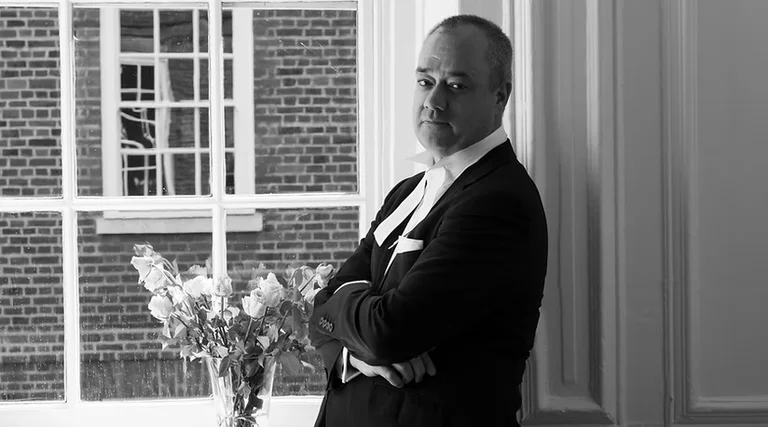
Toby Cadman, former lawyer for Nasim Haradinaj, has written again about the work of the Specialist Chambers, strongly criticising it for secret meetings with donors, the discussions held at them, and the Court’s approach to a British report that found serious allegations of violations of the rights of the accused.
Below is the unofficial translation of the article:
When the Kosovo Specialist Chambers (“Specialist Chambers”) were established, the promise was simple and serious. A court composed of international judges, located far from Pristina, in The Hague, would try the most serious allegations arising from the 1998–1999 conflict, free from the intimidation, witness interference and political pressure that had undermined previous efforts to ensure accountability. Isolation was central to this concept.
The difficulty, a decade later, is that the Specialist Chambers have been isolated not only from domestic pressure, but from almost every form of external accountability. A court that answers to no one outside its walls is a court the public is being asked to trust on faith alone.
This tension became particularly visible last month.
The Bar Human Rights Committee of England and Wales (“BHRC”), at the request of the Kosovo Ombudsperson, published a careful and deliberately preliminary review of the Specialist Chambers’ compliance with human rights standards.
This is not a polemical text. It acknowledges that the court’s formal legal framework is generally sound and, in many respects, broadly in line with the European Convention on Human Rights (“ECHR”) and the International Covenant on Civil and Political Rights, both of which form part of Kosovo law.
Its concerns lie elsewhere: in how this framework is applied in practice, and in the question of who, if anyone, is in a position to scrutinise it.
It should not be forgotten that the hybrid institution most similar to the Specialist Chambers, the Court of Bosnia and Herzegovina, was subjected to detailed scrutiny by external human rights organisations and even entered into a formal agreement with the Organization for Security and Co-operation in Europe (“OSCE”) to monitor war crimes trials.
The Specialist Chambers’ response was telling.
Instead of addressing the substance of the concerns, it issued a statement purporting to “correct the record”, without responding to the BHRC’s substantive findings in its report.
It emphasised that neither the Ombudsperson nor the reviewers had procedural standing before it, and that the report would not affect its judicial work.
It added, accurately, that the review had not identified any individual decision that had violated the rights of an accused person.
That, however, was not the purpose of the BHRC review. It was a systemic check, a “temperature check” of the institution, and it should be remembered that some of these matters remain sub judice (under judicial consideration).
In fact, while the BHRC found that the legal framework was largely in compliance with the European Convention on Human Rights—the ECHR—it was the practices of implementation that gave rise to concern.
For example, one concern raised was the fact that no accused person could be provisionally released in the Netherlands, the country where the Specialist Chambers are located.
This raises a real issue of compliance, particularly with Article 5(3) of the ECHR.
It should be remembered that the ECHR is not a set of illusory or merely aspirational principles. As the European Court of Human Rights has repeatedly emphasised, it is intended to ensure that judicial bodies take all necessary measures to avoid violations of the Convention and to protect the principles and guarantees of fundamental rights.
It is precisely here that the Specialist Chambers’ response misses the main point of the review and, by missing it, in fact proves it.
The criticism is not that a particular judicial decision is unlawful. The criticism is that the conditions that would enable anyone to know this with confidence—that is, transparency and independent accountability—are largely absent.
The statement that “neither the Kosovo Ombudsperson nor the BHRC has procedural standing before the Specialist Chambers” also misses the point.
Procedural standing is not necessary for independent external monitoring of fair trials.
Non-governmental organisations that strongly defend transparency and the rights of the accused at the domestic level, as well as many states that do the same through the Universal Periodic Review and other UN forums, often change their approach as soon as an institution becomes international.
They close ranks around institutions and treat external scrutiny as illegitimate, shielding these institutions from precisely the kind of independent monitoring on which the protection of fair trial rights depends.
It is telling that during the recent presentation organised by the BHRC in The Hague, where its preliminary report was formally launched, the diplomatic missions that attended took it upon themselves to defend the institution strongly—and in some cases blindly—and minimise the real concerns raised.
This matters even more given that the Specialist Chambers are, in practice, a testing ground for the next European initiative: the Special Tribunal for Ukraine.
States and the Specialist Chambers themselves should welcome this kind of scrutiny and engage constructively with it, treating it as an opportunity to learn lessons rather than dismissing it out of hand.
The Specialist Chambers’ response further criticises the BHRC review, claiming that it focused only on defence arguments and avoided discussion of victims’ rights.
It is important to emphasise that, in criminal proceedings, the right to a fair trial belongs to the accused.
Moreover, this relates to the wider concerns raised in the report about how the court balances the accused’s right to a fair trial with victims’ rights.
The Specialist Chambers’ response creates the impression that it is immune to any form of scrutiny.
This is deeply problematic.
There is no justification for an impenetrable veil of secrecy over judicial proceedings and how they are conducted.
If the institution’s credibility is to be built and concerns about transparency dispelled, then—as always—sunlight is the best disinfectant.
Importantly, there is no need to deal in abstractions, because the court has already provided the clearest possible illustration.
On more than one occasion, the President of the Specialist Chambers held confidential briefings for European Union diplomats—that is, for the political bloc that funds the institution—about its ongoing work. The public learned of this only because a transcript of one such briefing was leaked to Euronews.
According to the subsequent recusal request, and as reported at the time, the President used a confidential diplomatic briefing to complain about the number of defence lawyers who were reportedly complicating the court’s work, while the Specialist Prosecutor reportedly told diplomats that a defendant would receive a life sentence before any trial had begun or any evidence had been presented. When this came to light, the response was that such briefings are routine twice-yearly updates that simply summarise matters already covered in public filings.
At the BHRC’s presentation in The Hague, diplomats brushed these concerns aside, echoing the Specialist Chambers’ position that this is common practice and all courts do it.
That response fails on two levels.
First, it is inaccurate.
A status update summarising public filings does not include a sitting judge making editorial comments to the court’s funders about the defence bar, nor a prosecutor predicting the outcome of a case before a single word of evidence has been heard.
Those matters are not in public filings. They are the opposite of neutral case management, and describing them as a routine summary does not make them so.
There is a wide gap between providing administrative updates and financial reporting to the court’s donors, and discussing matters relating to the future or ongoing proceedings in cases—especially when those same States may be called upon to consent to the provisional release of an accused person in their territory.
Second, even if such contact were truly commonplace, frequency is not a justification.
A practice does not become compatible with judicial independence, impartiality and equality of arms simply because it is common.
The measure is not what officials usually do, but what the right to a fair trial and the appearance of justice require.
Confidential, one-sided communications between the judiciary and the prosecution on the one hand, and the court’s political paymasters on the other, concerning current cases and the parties before it, would be inappropriate whether they occurred once or twice a year.
“It is always done” is a description of the problem, not an answer to it.
If this is in fact a practice of international courts and tribunals, then that practice should stop.
Moreover, let us not forget that even if it were considered acceptable by an international court or tribunal—which it is not—the Specialist Chambers are not an international court.
That event captures both failures at once.
The transparency deficit is clear: we know what was said only because a document was leaked, not because the court disclosed it, and the briefings were confidential by design.
The review’s recommendation that the Specialist Chambers adopt clear protocols for such communications, with notice and disclosure to the parties and, where appropriate, their participation, is therefore not abstract.
It responds to a documented event.
And the same evidentiary concerns run through the broader review: reliance on material of disputed provenance, including intelligence from external sources, admitted without the rigorous examination of origin and chain of custody that a domestic court would require.
A court cannot demonstrate that it is fair while the channels that sustain it—of money, judges, evidence and quiet diplomatic contact—remain in the shadows.
Now consider accountability, and here the vacuum is structural.
Where can a party, or a citizen, turn to test how the Chambers exercise their power?
When the diplomatic briefings were challenged, the recusal of the President and Vice-President was a matter for the same judges of the Specialist Chambers.
Appeals go to the Specialist Chambers’ own panels.
Constitutional questions are resolved within the Specialist Chambers’ own structure.
Oversight of human rights compliance belongs to an Ombudsperson dedicated to the Specialist Chambers—that is, internal to it—while the national Ombudsperson who commissioned this review is told that they have no standing.
Detention is monitored by the International Committee of the Red Cross, and detention alone.
There is no avenue for challenging the President’s broad administrative and judicial functions, and no real mechanism for challenging judicial appointments.
Every line of accountability loops back into the institution itself.
That is what it means for a court to stand in a vacuum: it reviews itself, certifies itself, and then declares external review irrelevant.
The consequences for the defence are not abstract either.
The review identifies resource and procedural inequalities that tilt the field against the accused, structural barriers to provisional release that keep defendants in detention, and evidentiary rulings that favour untested prosecution material.
These are precisely the harms that independent oversight exists to catch.
Their significance is magnified, not diminished, by the fact that no independent body is positioned to catch them.
It is worth being fair to the Specialist Chambers.
Its judges are serious people doing difficult work, and the cases before it, including the trial of former Kosovo Liberation Army leaders, carry immense weight for victims who have waited a very long time for a reckoning, although it must be acknowledged that this is the fourth international (internationalised) judicial mechanism since the war.
The point is not that the court is corrupt or that its outcomes are predetermined.
The point is more uncomfortable than that: we are being asked to assume the court’s fairness rather than verify it, and the institution has been built in such a way that verification is almost impossible. When a human rights review arrives, the answer cannot be that the reviewers lack standing.
Standing is a doctrine to be pursued.
It is not a shield against accountability, and a confident court does not cling to it.
None of the remedies proposed by the review threatens the court’s independence.
Allow genuine challenges to the President’s administrative and judicial decisions.
Publish protocols for contact with states and other external actors, with notice and disclosure to the parties.
Subject contested evidence to real scrutiny of its provenance.
Be candid about relations with funding states.
Invite sustained and independent trial monitoring.
Each of these strengthens legitimacy rather than undermining it.
A court with nothing to hide has nothing to fear from any of them.
International criminal justice lives or dies by a single thesis:
that power, even power exercised in the name of victims, must itself be accountable.
The Specialist Chambers were intended to embody that thesis.
By holding secret briefings with its funders, insulating itself from scrutiny, and meeting good-faith criticism with the language of legitimacy, it risks becoming its opposite—a tribunal that demands accountability from others while refusing it for itself.
Legitimacy cannot be certified by oneself.
It must be demonstrated, openly, to the people who have the right to ask.
Until the Specialist Chambers are willing to do this, they will continue to produce judgments that are sound on paper and unverifiable in practice, which is precisely the condition the rule of law was built to eliminate.








