
On a scorching morning in early July, with temperatures expected to exceed 40°C, a crowd in Nanterre, a suburb of Paris, rushed the doors of a Lidl supermarket until they gave way. The sweaty people were not hooligans, but desperate shoppers jostling for the last portable air conditioner. At another Lidl, two men came to blows. Meanwhile, French politicians were embroiled in a debate of their own: how many air conditioners are too many?
At almost the same time, in cities in Pakistan and Bangladesh, protesters blocked roads and surrounded electricity offices after weeks of power cuts, as temperatures reached as high as 45°C. In Chandpur, Bangladesh, in late June, residents allegedly attacked an employee of the Rural Electrification Board. In India, power cuts during a heatwave in May prompted similar protests in several villages, where residents complained that they could not even switch on fans at night. Riots over shortages of the electricity needed to keep cool have also broken out in countries such as Iraq and Sri Lanka.
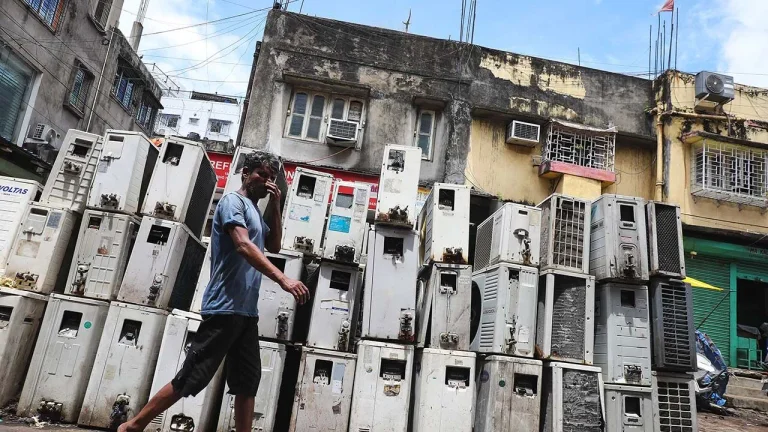
As extreme temperatures test people’s patience and power grids, clashes over air conditioners—or the energy that powers them—are threatening to shake up politics. This is a typically modern problem: before 1960, air conditioners were almost nonexistent even in the United States, while today climate change has made them almost essential in much of the world. In November, the COP30 climate summit in Belém, Brazil, declared cooling technologies such as air conditioners “essential infrastructure”, on a par with water, energy and sanitation.
Of all extreme weather events, high temperatures are by far the deadliest. According to a model published in the medical journal The Lancet, between 2000 and 2019, around 489,000 people died each year as a result of heat. Air conditioners have proved to be an exceptionally effective solution. Another study in The Lancet estimates that, in the early 2020s, they prevented around 190,000 deaths a year among people over 65 alone. In the US, researchers at the National Bureau of Economic Research estimate that the use of air conditioners in homes reduced the risk of death on very hot days by around 75% over the course of the 20th century. Almost all of this decline occurred after 1960, when American households began using them widely.
This might lead you to a simple political conclusion: more air conditioners for everyone, everywhere. But in practice, it is not that easy. In rich countries, politicians clash over climate and energy efficiency. In poor countries, the debate revolves around the cost of electricity and aging power grids. Meanwhile, everywhere in the world, governments face a public that increasingly expects—even demands—access to air conditioning.








