
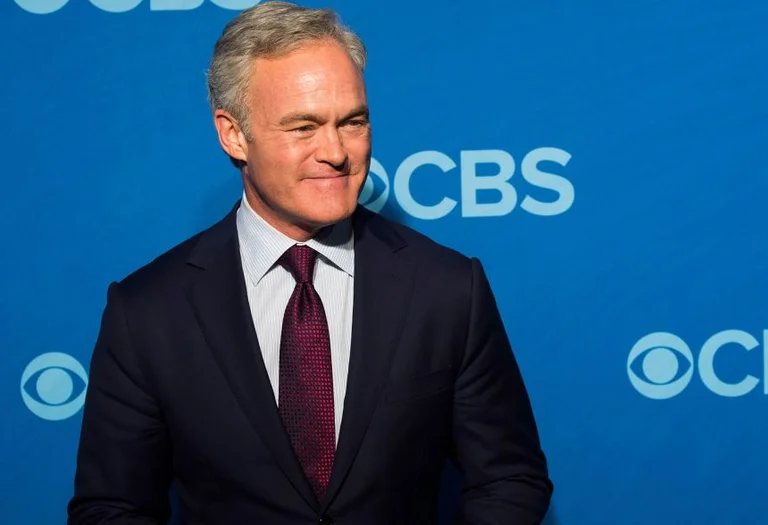
CBS News fired Scott Pelley on Tuesday, removing one of the network’s best-known journalists in a clash over the future of “60 Minutes,” the most-watched news program in the United States.
Pelley, 68, a “60 Minutes” correspondent and former “CBS Evening News” anchor, joined the network in 1989. At a staff meeting on Monday, he accused the network’s editor-in-chief, Bari Weiss, of “killing ‘60 Minutes’,” referring to last week’s departure of the show’s leadership team and two on-air correspondents.
“We have parted ways with Scott Pelley,” Nick Bilton, the network’s technology journalist appointed last week as the new executive producer of “60 Minutes,” wrote in a memo to staff on Tuesday evening.
CBS News declined to comment. In an official letter to Pelley obtained by The New York Times, Bilton wrote that the correspondent had been “terminated for cause, effective immediately.”
In a phone interview on Tuesday evening, shortly after he was fired, Pelley said he had devoted decades of his life to “60 Minutes,” a program he said he still cared deeply about.
“I’ve been in combat in Afghanistan. I’ve been in combat in Iraq. I’ve been in the war zone in Ukraine several times, risking my life and my family’s happiness because of my commitment to this program,” he said.
Pelley’s firing is considered one of the most significant decisions of Bari Weiss’s tumultuous tenure at CBS and is expected to heighten tensions that have engulfed the network for months.
The decision also raises the stakes of Weiss’s choice to replace the entire “60 Minutes” leadership team and appoint Bilton, who has no experience in traditional television, to lead the program. However, the show’s viewership had increased by 9% over the last season compared with the previous year, and it remains one of the country’s most-watched weekly broadcasts.
Viewers have grown accustomed to familiar figures such as Pelley, who had contributed to the program since 2004. The “60 Minutes” staff is known for its editorial independence, and it remains unclear how it will respond to the veteran journalist’s departure.
During Monday’s staff meeting, which Weiss did not attend, Pelley repeatedly asked Bilton about the network’s decision to remove Tanya Simon, the former executive producer. He also told him that he had “few” qualifications to lead the show and that he “would never be welcome” at “60 Minutes.”
In his letter to Pelley, Bilton expressed displeasure with these comments. He wrote that the journalist had “hijacked” his first staff meeting to publicly discredit him and had shown little interest in the show’s future success.
Pelley responded by saying that Bilton’s letter “shows a complete misunderstanding of what we work for and live for at ‘60 Minutes’.”
Earlier in the day, he had sent a statement to The New York Times attacking the new leadership of CBS News, writing that “incompetence and unprofessionalism in the new management have caused chaos” at the network. He added that “the erosion of values at the top has become unacceptable.”
Pelley also claimed that senior CBS News executives had pressured him to introduce bias into “60 Minutes” reports during the last season, although he gave no specific details.
Bilton will now take charge of a program that has lost four on-air correspondents in the past month. Sharyn Alfonsi and Cecilia Vega departed last week, while Anderson Cooper voluntarily stepped down at the end of the season in May.
Weiss was appointed last year by CBS owner David Ellison, with the task of adapting the news division to the digital age. An opinion journalist with little television experience, she has long been a critic of traditional media.
Her relations with the “60 Minutes” staff have been tense. At a meeting in October, she asked the journalists why the public thought they were biased. In December, she temporarily blocked the broadcast of a report about a prison in El Salvador, arguing that it required more reporting. Correspondent Sharyn Alfonsi accused her of a “political” move. The report was later broadcast in full.
Pelley’s future appeared uncertain from the moment of his clash with Bilton on Monday. CBS News executives held a meeting on Tuesday to find a solution, but it ended without an agreement. Pelley, Weiss, Bilton, and CBS News president Tom Cibrowski attended the meeting.
According to Pelley, Weiss refused to answer his questions about the reasons for Tanya Simon, Sharyn Alfonsi, and Cecilia Vega’s departures. He described her behavior as “cold, insensitive, and beneath the dignity of CBS News.”
After the meeting, Pelley returned to the “60 Minutes” offices, where staff were waiting for news about his fate. After several hours passed without an answer, he urged his colleagues to go home and then left the building himself.








