
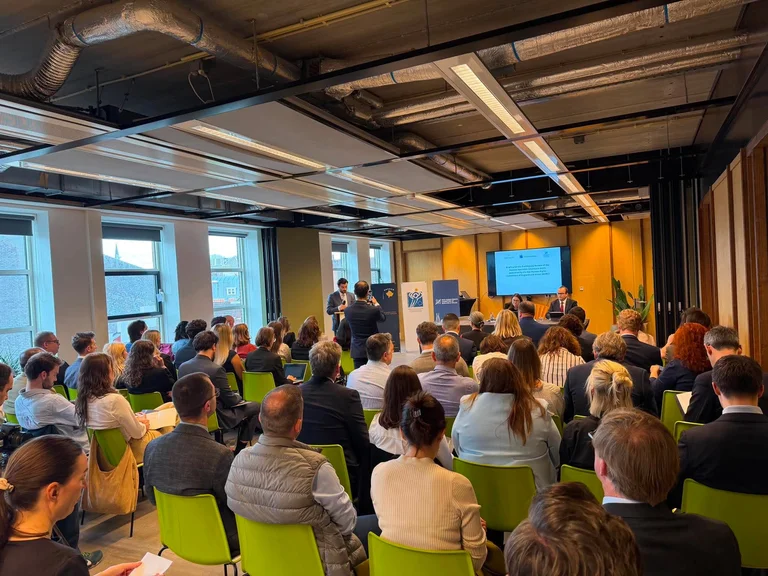
The report by the “Bar Human Rights Committee of England and Wales” (BHRC), which found violations by the Specialist Chambers in the trial of former leaders of the Kosovo Liberation Army, is being presented at a conference in The Hague, Netherlands, where the Specialist Chambers are based.
The report is being presented by Gus Waschefort and Lauren Lederle, who researched the BHRC report. Diplomats from European Union countries and representatives of the U.S. Embassy in The Hague are attending the conference.
One of the main criticisms made by the British lawyers is the expanded role of the judges, which, according to the report, risks undermining the fundamental principle of a fair trial: equality of arms between the parties.
The report notes that the judges are not limiting themselves to the role of neutral arbiters, but are actively intervening in building the case. They have questioned witnesses for dozens of hours, often going beyond what the prosecution itself has presented. In some cases, according to the report, the judges have used documents that were not part of the admitted evidence, including material obtained from the internet, without prior notice to the defence. Such a practice, the report states, “creates the conditions for the Trial Panel to function as a second prosecutor”.
“The framework of the Specialist Chambers gives the Trial Panel considerable latitude as the finder of fact and law. Without clear limits, this can create conditions for the Panel to function as a ‘second prosecutor’, affecting equality of arms. The Defence faces not only the Prosecution’s case, but also that of the Trial Panel, with clear consequences for resources and strategy,” states the report, which is more than 90 pages long.
Among other things, the report also mentions the admission of evidence from Serbia, while raising serious concerns about violations of the rights of the accused—the leaders of the Kosovo Liberation Army and others.
It also stresses that “the liberty of individuals is at stake”, and notes that victims who have been waiting for justice for so long are interested not only in the justice delivered, but also in how it is delivered.
Following the report by the British lawyers, the Specialist Chambers made a series of public efforts to clarify its findings.
The court also sent emails to the embassies of European Union countries accredited in The Hague regarding this report.








