
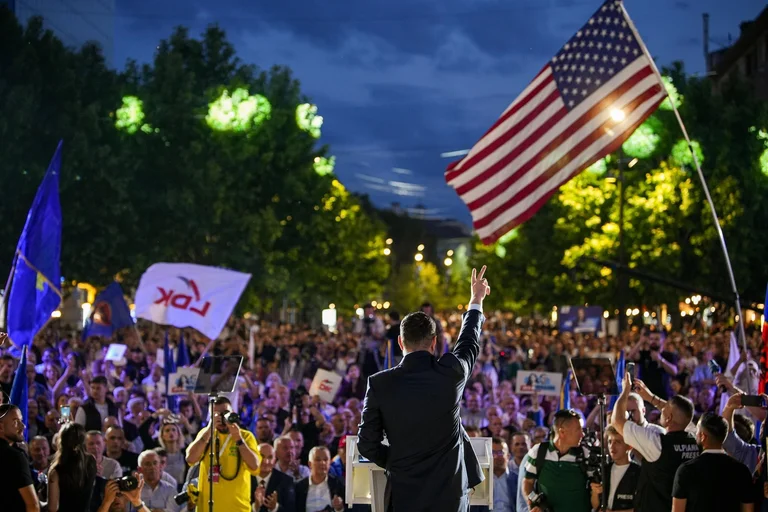
The Democratic League of Kosovo is once again in the same place it has been many times before: in a crisis of its own making.
The result of the parliamentary elections of June 7, in which the LDK came third with around 17 percent of the vote and 18 MPs, did not bring post-election stability, but opened another cycle of clashes within the party. Dissatisfaction that had until then been contained within local structures emerged publicly.
The Peja branch called for Lumir Abdixhiku’s resignation. Lipjan followed. Then a branch in Pristina. All three municipalities are governed by the LDK. One of the party’s central figures, Hykmete Bajrami, also called for his resignation.
Abdixhiku’s response was as typical of this party as the crisis itself: refusing to resign and turning the accusation back on his accusers. A familiar cycle in which no one takes full responsibility, but everyone demands accountability from others.
And so another real problem for the LDK began.
This is not an isolated crisis. It is a repetition.
The LDK’s history is strange. Political opponents have rarely managed to inflict the damage that it has inflicted on itself. Neither the PDK at the height of its power nor Vetëvendosje at the peak of its popularity has shrunk the LDK as much as its internal clashes have.
Whenever the party has found itself close to a comeback, it has been swept up in a battle for leadership. Whenever it has tried to heal its wounds, it has opened new ones.
For the LDK, this is no longer politics. It is a ritual.
The Assembly of Chairs, 2006
After the death of Ibrahim Rugova, Kosovo’s historic President and the LDK’s spiritual leader (January 21, 2006), major divisions began within the party that had consistently enjoyed the greatest public support.
The ambition to take the helm of the LDK led to the formation of two groups within the country’s oldest party.
The clashes culminated in what is known as the Assembly of Chairs. Fatmir Sejdiu was elected LDK chairman at an assembly marked by punches, with chairs flying over the heads of party delegates.
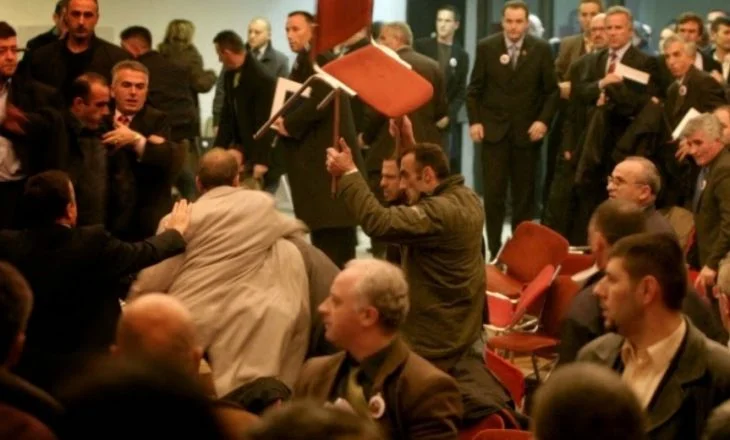
The other group, led by Nexhat Daci, which sought to take over the party’s leadership, was left out. It lost the contest.
After this, he and several other important LDK figures founded another party. He named it the Democratic League of Dardania (LDD).
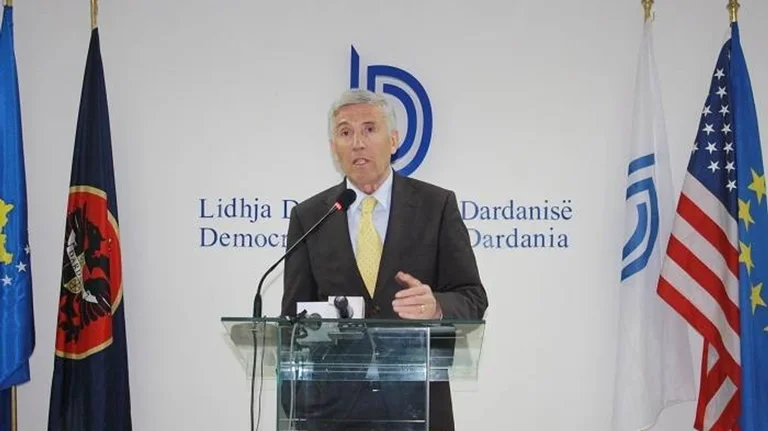
The damage done to the LDK was significant. In the 2007 elections, the LDK lost for the first time. The PDK won, and Hashim Thaçi became Prime Minister of Kosovo. The LDK joined Thaçi’s government, which declared Kosovo’s independence.
Meanwhile, Daci’s LDD managed to enter the Assembly. In the 2007 elections, the party won 9 seats. It remained in opposition. In the 2010 elections, it failed to pass the threshold. But although some LDD figures, such as Besa Gaxherri, Naser Rugova and Adem Salihaj, returned, the electorate did not return to the LDK.
New parties such as the New Kosovo Alliance of businessman Behgjet Pacolli gained ground and took pieces of the LDK’s electorate.
The major split in 2006 meant the LDK never recovered. It never regained its former glory—the era of undisputed victories.
It became entrenched in second place. That is what happened in 2007, 2010 and 2014. The leaders changed, but not the result. Neither Fatmir Sejdiu nor Isa Mustafa, who was elected LDK chairman in 2010, managed to restore victory.
2014
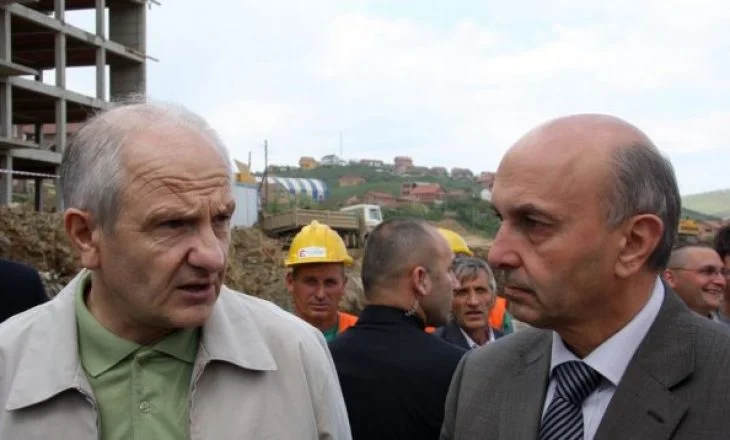
The LDK’s next internal clash, though more controlled and less damaging, took place in 2014. After Isa Mustafa had lost the 2014 election to the PDK, placing second, he decided to reach an agreement to govern in coalition with the PDK, taking the position of Prime Minister and abandoning the opposition coalition known as VLAN. A group within the LDK, led by Vjosa Osmani, rebelled.
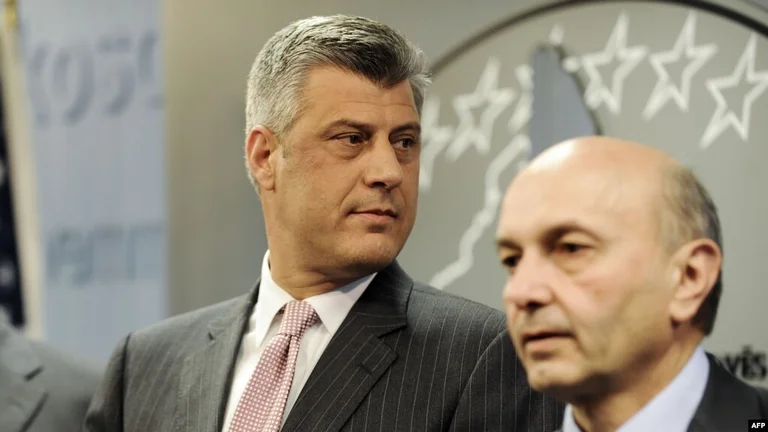
They strongly opposed the coalition with the PDK. In fact, they did not vote for the government that would be led by their own chairman.
But despite the opposition, no one left the party.
In the 2017 elections, with Avdullah Hoti as its candidate for Prime Minister, the LDK came third, behind the PAN coalition and the Vetëvendosje Movement. But in percentage terms, it was about level with its 2014 result.
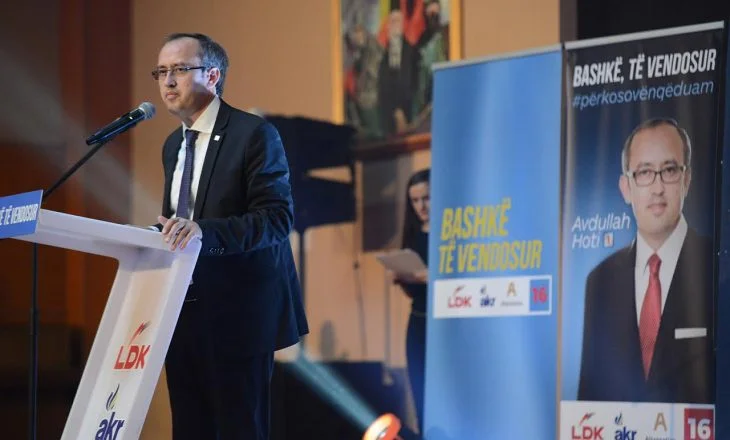
They decided to remain in opposition. During this period, they had an inexplicable flirtation with Vetëvendosje, the party that had been their biggest opponent while they were in government (2014-2017).
“The Great Union”
Remaining in opposition united the LDK. A major intra-party compromise led to Vjosa Osmani, the most popular figure among the LDK electorate at the time, being nominated as a candidate for Prime Minister in the October 6, 2019 elections.
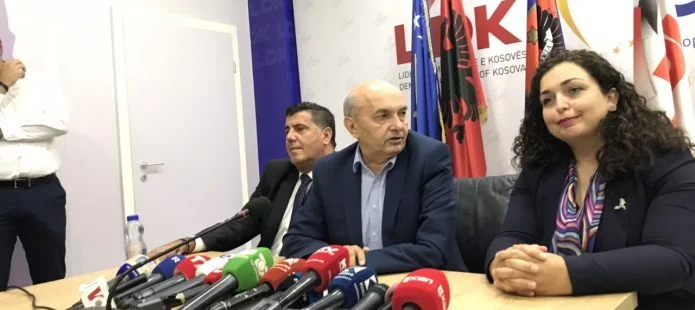
It seemed that Rugova’s party had found its path back. Despite the narrow result, a gap of around 15,000 votes, the LDK came second. This time behind Albin Kurti’s Vetëvendosje.
The events that followed would deal the LDK its biggest blow ever.
The second halving
After many days of negotiations, VV and the LDK managed to form a coalition. Albin Kurti became Prime Minister, while Vjosa Osmani became Speaker of the Assembly.
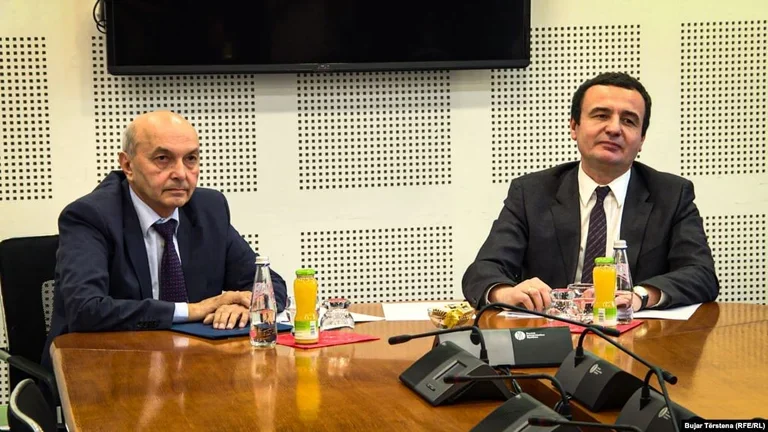
This government would be short-lived. It would last only 50 days. Albin Kurti broke the coalition agreement. He dismissed Agim Veliu from the position of Minister of Internal Affairs without prior agreement with the LDK, as stipulated in the agreement.
This is where the major split within the LDK began—again. The vast majority of the party’s MPs and leadership supported breaking the coalition and bringing down the Kurti government. Vjosa Osmani and some of her supporters within the party opposed this.
After the Kurti government fell, Osmani opposed the formation of a new government by her fellow party member, Avdullah Hoti.
Osmani left the LDK in 2021. She had founded an initiative called Lista GUXO in early 2021. Through this initiative, Osmani formed a coalition with Albin Kurti, becoming part of the VV list in the February 14, 2021 elections.
In those elections, Osmani ran for President, while Kurti ran for Prime Minister. After winning more than 50 percent, the duo secured both positions.
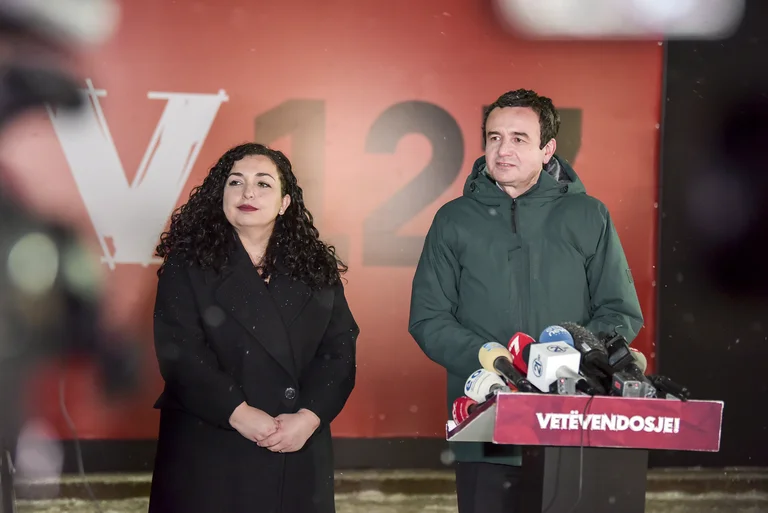
Although she personally succeeded in reaching the country’s highest office, Osmani cut her former party’s support in half. In the February 14, 2021 elections, the LDK recorded its worst result in its history. Around 13 percent.
Because of this poor result, Isa Mustafa resigned as LDK leader.
Lumir Abdixhiku took over as party leader.
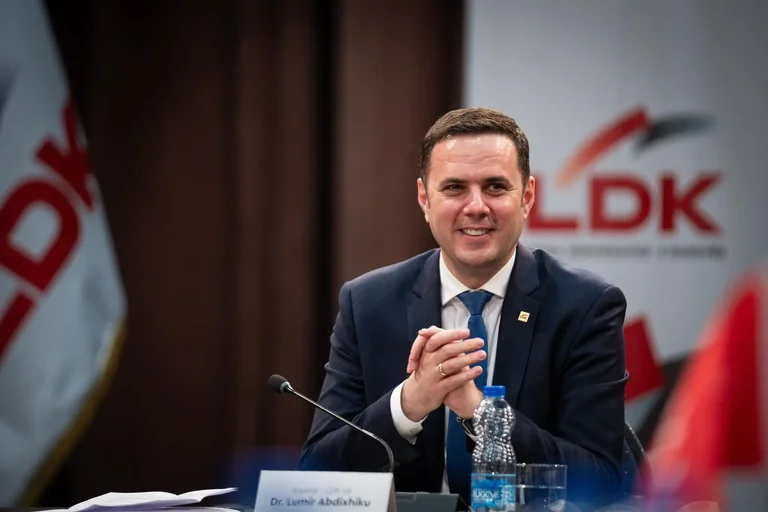
Under his leadership, the LDK managed to win the capital, Pristina, in the 2021 local elections.
This was presented as the beginning of the LDK’s resurgence.
But when he ran for Prime Minister for the first time, in February 2025, Abdixhiku failed to bring about the LDK’s major comeback. He won slightly more than 18 percent. It increased by 5 percent.
After these elections, there was no major opposition within the LDK. Only Avdullah Hoti, among the party’s central figures, called for his resignation.
The LDK would soon find itself in another situation. The December 2025 elections would return it to its 2021 result, with 13 percent, or 15 MPs.
After this extremely poor result, Abdixhiku took responsibility and said he was also prepared to resign.
But later he changed his position. He called for a vote of confidence at the LDK Assembly, which was held on January 31.
There, Abdixhiku survived the confidence vote. Around 55 percent of delegates voted in favor of him remaining at the head of the party.
After being reconfirmed as party chairman, Abdixhiku began a campaign for what he called the unification of the right.
Vjosa Osmani’s falling-out with Albin Kurti, after the latter did not nominate her for another term as President, led Abdixhiku to move closer to Osmani and thus believe he could grow the party.
After the country went to elections because no President had been elected, Abdixhiku proclaimed the “great” unification of the LDK, since Osmani was now also part of its ranks.
Although there was some dissatisfaction over Osmani’s return and her placement at the top of the list, this did not stop Abdixhiku from centering the entire campaign on Osmani and himself.
The result in the June 7 elections was nowhere near what had been proclaimed. They came third again. They gained three more MPs than they had in December. From 15 to 18.
Abdixhiku and his supporters viewed the result as a success. His opponents called it a failure and demanded that he resign as a moral act and a sign of taking responsibility.
But it does not seem that this will happen. Abdixhiku has made it clear that he will not step down as party leader; he even accused some branches of coordinating. He also accused some of sabotage during the elections.
This is the latest clash in the LDK, the party that was created and became a source of hope for Kosovo Albanians in their most difficult historical circumstances. The party that challenged the system of the Butcher of the Balkans, Slobodan Milošević. The party that created the parallel system in Kosovo. The party that put Kosovo on the agenda in the world’s chanceries. The party that first articulated concretely the idea of an independent state of Kosovo.
Whenever the party has found itself close to a comeback, it has been swept up in a battle for leadership. Whenever it has tried to heal its wounds, it has opened new ones. From the Assembly of Chairs in 2006, to Vjosa Osmani’s departure in 2021, and now the current battle over Lumir Abdixhiku, the pattern seems almost identical: internal conflict, division and the loss of voters.
The LDK has survived regimes and political opponents. It has also survived election losses. But whenever it has been most seriously wounded, the wound has not come from outside.
It has come from its own hand.
Therefore, the question is not whether the LDK will survive this crisis too. The question is how much this latest clash will cost. Because every past crisis has ended with fewer people, fewer votes and less political weight than before.
Ultimately, the greatest danger to the LDK has never come from outside. It has come from within its own walls. And that is precisely where today’s battle is unfolding.
If no compromise is found, the LDK will once again write its own misfortune. This time, it could be fatal.
And until the pattern changes, the result will remain the same: an LDK that always remembers itself as a big party, but increasingly functions as a party managing its own decline.








