
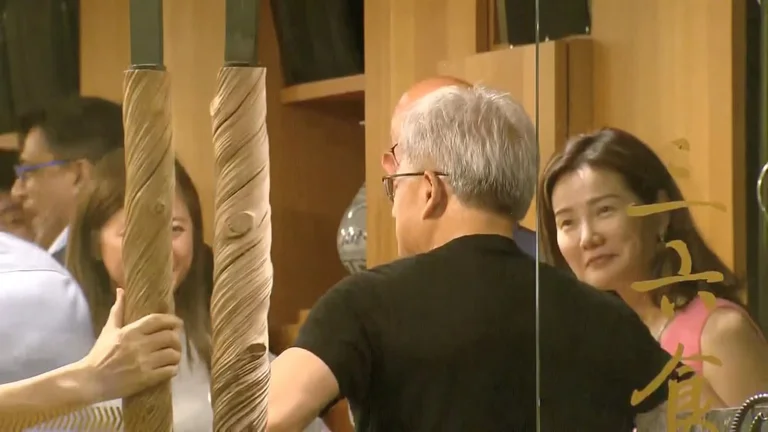
Alice Huang, whom U.S. intelligence agencies have concluded is an agent of China, emerged from Shanghai’s elite world of finance to partner with technology giants and secure essential chips for artificial intelligence (AI).
In December 2023, a Chinese executive known as Alice Huang met Nvidia CEO Jensen Huang and a small group of his colleagues at an Italian restaurant in Singapore.
In a photograph from the meeting, which had not been previously reported and was confirmed by The New York Times, Ms. Huang is seen smiling beside Mr. Huang, who was wearing his signature black leather jacket.
He was holding a glass of red wine.
Ms. Huang had reason to celebrate.
With the backing of wealthy investors in Shanghai, she had just restructured a company that would soon buy billions of dollars’ worth of AI chips from Nvidia.
The U.S. government had barred Chinese companies from buying these advanced chips, but Ms. Huang had circumvented the ban by setting up a company, Megaspeed, through a shell company in Singapore.
Her close relationship with Nvidia’s chief appeared to make her path even easier.
Just four days after the change in ownership, Megaspeed was named an Nvidia cloud services partner, giving it access to highly sought-after components.
Their relationship is now at the center of a global geopolitical race between China and the U.S. government for dominance in artificial intelligence.
It has shaken and captivated the technology industry on both sides of the Pacific, bringing to light often unseen aspects of the fierce technology race, such as espionage operations and the human vulnerability of figures shaping the future of artificial intelligence, like Mr. Huang.
The Singapore meeting was evidence that Ms. Huang’s relationship with Mr. Huang had begun much earlier than had been known up to that point. It also attests to the close social and business ties that developed over years of technological cooperation between China and the United States, and how those ties have continued to exist despite the deep geopolitical divide of the past decade.
The New York Times was the first outlet to report last year on Mr. Huang’s ties to Megaspeed and Ms. Huang.
Last month, the newspaper reported that U.S. officials had concluded that she was a Chinese intelligence agent who had developed a close relationship with Nvidia’s chief, and that President Trump had taken no action after being informed about the matter last year.
Last week, The Times reported that Ms. Huang had been recruited for espionage by China’s Ministry of State Security. On Sunday, Mr. Huang, 63, acknowledged that he had had an intimate relationship with her, while Nvidia announced that it had launched an internal investigation.
Many details of the relationship between Mr. Huang and Ms. Huang, including when they met and when she may have been recruited by Chinese intelligence, remain unknown.
But Ms. Huang’s work with Megaspeed put her at the center of a broad effort to amass AI chips across Southeast Asia and ensure Chinese companies had access to the technology.
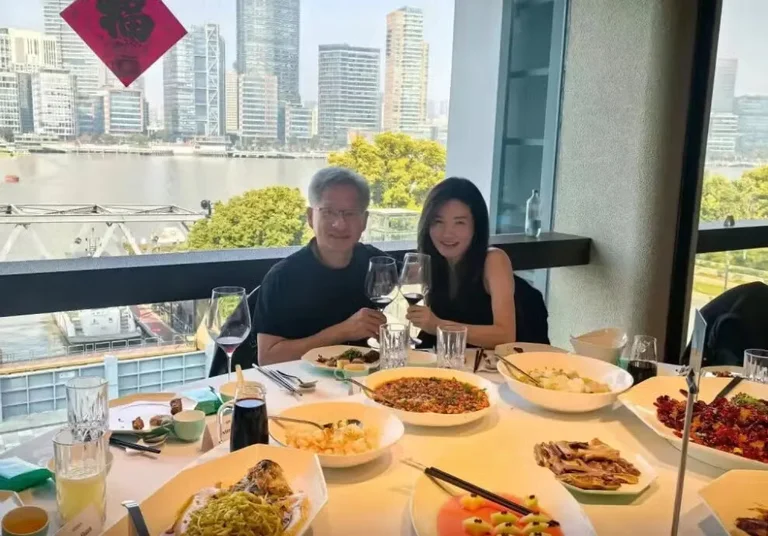
Photos from Ms. Huang’s social media accounts, verified by The Times, show that she and Mr. Huang met in various locations around the world over the past three years, including in Shanghai, at Nvidia’s headquarters in Silicon Valley, at a golf resort south of San Jose, California, and in Taiwan.
After the 2023 meeting in Singapore, Ms. Huang, whose name in Chinese is Huang Le, drew on her experience and connections in Shanghai’s financial world to enter technology circles.
She turned Megaspeed into a destination for Nvidia technology, working with a longtime business partner who was often introduced as her husband.
Her success drew the authorities’ attention.
By 2024, the United States had sent a Commerce Department official to inspect Ms. Huang’s company.
During her visits to Taiwan, she was monitored by the Taiwanese government, including when she appeared publicly with Mr. Huang.
For part of 2025, she was not allowed to leave Singapore because of an investigation.
Behind Megaspeed was a network of wealthy Chinese technology investors with ties to local data centers, the government and the defense industry.
Between 2024 and 2026, the company bought billions of dollars’ worth of advanced AI technology from Nvidia, bringing Ms. Huang even closer to Mr. Huang.
Details about Ms. Huang, most of which had not been previously reported, are based on a Times analysis of company documents spanning a 15-year period, as well as interviews with more than six people and government officials familiar with her and her businesses.
Ms. Huang did not respond to The New York Times’ request for comment.
Nvidia and Megaspeed declined to comment.
China has denied the espionage allegations.
A life in finance
For many years, Ms. Huang’s life was centered on Shanghai’s elite world of finance.
According to people who have met her, she socialized easily with technology industry executives from both China and the United States.
In China, Ms. Huang is closely connected to a business partner named Kang Wei. Mr. Kang, a 51-year-old fund manager, was introduced to Chinese investors and Megaspeed employees as Ms. Huang’s husband, according to people familiar with the matter. The Times has been unable to verify whether they are married.
Mr. Kang rose to prominence at a young age, building a reputation as a skilled stock market strategist during the 2000s. Chinese financial media portrayed him as a kind of prodigy. In the 2010s, he moved into the private equity sector, including investments in online gaming companies.
China’s securities regulator has fined Mr. Kang at least twice for failing to disclose his holdings in publicly listed companies. Regulatory documents also show that he has been involved in disputes with other investors over control of companies.
According to one of the people interviewed, Mr. Kang has boasted about Ms. Huang’s connections to Nvidia’s Mr. Huang and used those ties to secure financing for their businesses.
Ms. Huang’s career reflected Mr. Kang’s focus on finance.
According to her résumé posted online, she had worked for four years as a television reporter before taking jobs at HSBC’s private bank and CITIC Securities, a Chinese state-backed investment bank.
From time to time, she also appeared alongside Mr. Kang.
In an August 2023 photograph, the two visited a state-backed automotive technology company in the eastern city of Nanjing.
The earliest company documents in which Ms. Huang’s name appears date to 2010.
They relate to a small company described as a “sports and entertainment club,” registered inside Beihu No. 9, a private golf club in Beijing frequented by officials and equipped with themed saunas, steam rooms and a buffet featuring foie gras, hairy crab and Häagen-Dazs ice cream.
In the years that followed, Ms. Huang expanded her activities, investing in a Chinese medical equipment manufacturer that would later list its shares on the Hong Kong Stock Exchange. According to company documents, she acquired her stake through a company registered outside China.
By 2020, Ms. Huang and Mr. Kang had become well-known names in some of Shanghai’s investment circles. They managed a network of interconnected companies to make acquisitions and takeovers, as well as invest in various businesses.
In the spring of that year, their network secured a major project, helping to build and operate an AI computing center in Shanghai for internet giant Tencent.
This set the stage for Ms. Huang’s next venture: expanding abroad to secure critical chips.
Setting up Megaspeed
In late 2022, the U.S. government began imposing restrictions on the sale of advanced AI chips to China. The United States feared these components could give Beijing an economic and military advantage.
To have any chance of securing these chips, a company had to be registered outside China and have no obvious ownership ties leading back to the country.
In 2023, Ms. Huang used a company registered in the British Virgin Islands to buy a Singaporean subsidiary of an online gaming company linked to her Shanghai network, called 7Road.
The company was renamed Megaspeed.
It would become Ms. Huang’s first major venture in the chip market.
Later that year, Megaspeed was transferred to a Singapore shell company, according to documents filed in the country. After the transfer, Ms. Huang continued to control Megaspeed’s day-to-day operations, according to people familiar with the company.
By June 2024, Ms. Huang was so close to Jensen Huang that she boasted about her access to him at a technology industry event in Taipei.
Just after midnight, while socializing with a group of technology company executives, she offered to ask Mr. Huang to join them, recalled Parker Schmitt, who was there.
“She said, ‘I bet you I can get Jensen here,’ and then Jensen showed up right away,” said Mr. Schmitt, CEO of NetThunder, a company that provides data management software.
A little later, Mr. Huang arrived and had a small glass of whiskey with the group.
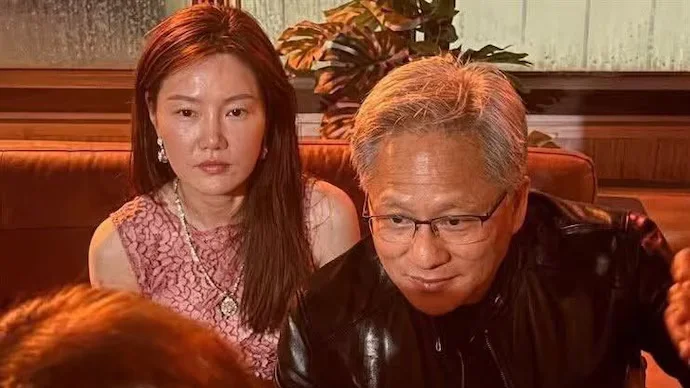
Mr. Huang was accompanied by two other Nvidia executives and had planned to attend the party, said a person close to the company.
Mr. Schmitt, who kept in touch with Ms. Huang, said her social media accounts were filled with photos of her with Mr. Huang, including pictures on a golf course and at restaurants where they drank wine.
According to Schmitt, she wanted to be seen as a talented sales executive, and “the photos with Jensen are a source of pride” in the technology industry.
Business takes off
That same month, Ms. Huang’s newly established business had a series of major developments.
Megaspeed began receiving large shipments of Nvidia’s most advanced AI chips, ultimately securing equipment worth more than $4 billion.
The company also secured a major new customer: Chinese e-commerce giant Alibaba.
A few months after the sale to the Singapore shell company, Megaspeed had established a subsidiary in Malaysia, which later pledged servers and intellectual property as collateral to Apex, an Alibaba subsidiary.
According to a person familiar with the business, Alibaba became Megaspeed’s main customer.
It was not long before Ms. Huang’s large AI chip orders began drawing attention.
In late 2024, the U.S. Commerce Department sent an official to inspect a Megaspeed data center and confirm that the Nvidia chips that had been delivered were there.
Some of Nvidia’s equipment was still packed in boxes, raising suspicions that it might be being transported into or out of the facility and had not been installed at that location.
That same year, Taiwanese authorities began monitoring Ms. Huang’s trips to the island, at the suggestion of the U.S. government, said a person familiar with the matter. She entered Taiwan on a Hong Kong passport and made other trips beyond her public appearances with Mr. Huang.
In March 2025, Ms. Huang traveled to the United States and visited Mr. Huang at Nvidia’s offices, along with other executives, according to The Times’ analysis of photos from the meeting.
Two months later, she was photographed having dinner with him and others in Taipei, where she posed for a photo and kissed him on the cheek.
However, problems were emerging in Singapore, where authorities had also begun investigating Megaspeed.
According to a person familiar with the investigation, Singapore’s government barred Ms. Huang from leaving the country and summoned her for questioning in 2025 as part of an investigation into false declarations of imports.
There was insufficient evidence to suggest that Ms. Huang was involved in the false declarations, and the investigation into her was concluded, the person said.
However, Singaporean authorities have said that investigations into Megaspeed are ongoing.
Ms. Huang then traveled to Shanghai, and a new executive began giving orders to Megaspeed employees, said a person familiar with the company.








