
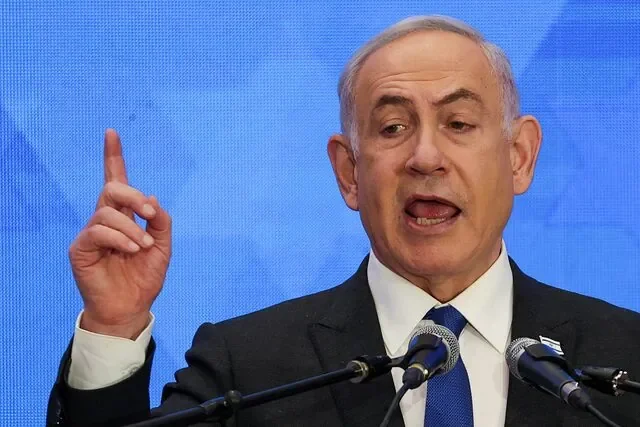
Israeli Prime Minister Benjamin Netanyahu’s bloc is expected to win 55 seats in the Israeli parliament, known as the Knesset, The Jerusalem Post reports, as vote counting from Tuesday’s election continues.
According to reports, Netanyahu’s Likud party is projected to win 28 seats, while United Torah Judaism is expected to take seven, Shas seven, Otzma Yehudit seven and the Religious Zionist Party six seats.
The opposition bloc, made up of Yashar, B’Yachad, Yisrael Beytenu and the Democrats, is expected to win 47 seats in the Knesset.
Gadi Eisenkot’s Yashar party is projected to win 21 seats. B’Yachad, led by Naftali Bennett and Yair Lapid, is expected to take 11 seats. Yair Golan’s Democrats are expected to win eight seats, while Avigdor Liberman’s Yisrael Beytenu is expected to take seven.
The latest results from the Central Elections Committee allocate 18 seats in the new Knesset to Arab parties. The Joint List has 12 seats, while Ra’am has six.
As Israeli media report, the possibility of forming a unity government that would include Netanyahu and Eisenkot is highly unlikely, as Eisenkot has refused to serve under Netanyahu’s leadership, including in a government with a rotating prime minister. Other opposition leaders have also ruled out joining a coalition led by the prime minister.
Eisenkot has called for the leader of the largest party within the opposition bloc to become his candidate for prime minister, but so far no agreement on this issue has been announced within the bloc.
Polls after polling stations closed have also raised the possibility of forming a minority government, which could win a vote of confidence in the Knesset without having an absolute majority of 61 seats. However, opposition within the bloc to relying on Arab parties could make such an agreement difficult.
The political deadlock, Israeli media report, could eventually lead to new elections, although the parties may still reach an agreement through coalition-forming negotiations.
The votes counted overturn the exit polls, which put the opposition bloc ahead of Netanyahu’s.
Turnout in Tuesday’s elections in Israel was 77.7 percent, the Israeli Central Elections Committee said, the highest in more than two decades and around 7 percentage points higher than in 2022.
The Knesset has 120 seats. To form a government, a simple majority of 61 members of parliament is required, which no one currently has.








