
The new Law on the Specialist Chambers provides for narrowing the jurisdiction of the Specialist Chambers to offenses related to the trafficking and removal of human organs, shortening the mandate period from 1998 to July 1999, reducing the maximum sentence from life imprisonment to 15 years, transferring to Kosovo cases that do not fall within its jurisdiction, serving sentences in Kosovo’s correctional institutions, and the possibility of individual pardons by the President.
The Law on the Specialist Chambers of Kosovo, initiated by the Democratic Party of Kosovo and passed by the Assembly on Tuesday, provides for bringing the Specialist Court back on track, to the very cases for which it was established – those involving allegations of “organ trafficking”.
What is the Specialist Court and what does it do today?
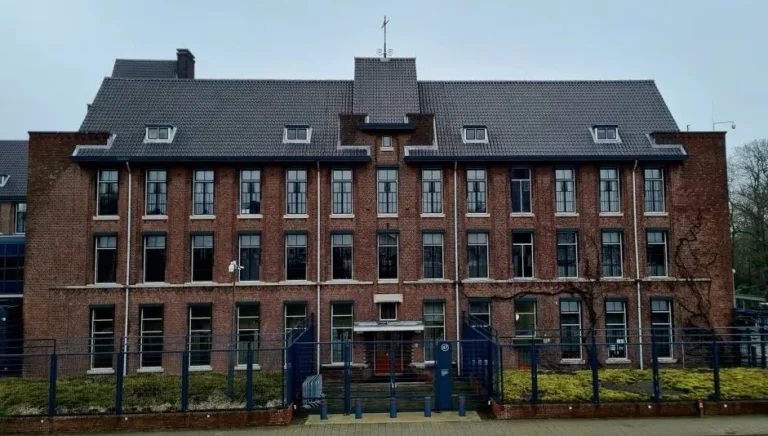
The Specialist Chambers and the Specialist Prosecutor’s Office are a court established under Kosovo law, but with international judges and prosecutors and based in The Hague. They were established to address the alleged crimes in the 2011 Council of Europe report, which dealt with the inhuman treatment of people and the illegal trafficking of human organs during the war in Kosovo.
The Specialist Chambers’ current mandate includes crimes against humanity, war crimes and some offenses against the administration of justice, for the period 1 January 1998 – 31 December 2000. The maximum sentence is life imprisonment.
But what does the new law provide?
The purpose of this law is explained in Article 1. It states that its purpose is “…to limit the jurisdiction of the Specialist Chambers and the Specialist Prosecutor’s Office exclusively to the specific criminal offenses set out in the Report of the Parliamentary Assembly of the Council of Europe, Doc. 12462, and to establish the procedure for the mandatory transfer of all other proceedings to the regular courts of the Republic of Kosovo”.
The law aims “to prevent the institutional degradation of the Specialist Chambers into an extraordinary court, which is prohibited under Article 103(7) of the Constitution”. It also aims “to reaffirm the institutional primacy and primary responsibility of the regular domestic courts”.
Main changes
Jurisdiction over fewer offenses.
Under this law, the Specialist Chambers will have jurisdiction over only two groups of offenses: the removal and trafficking of human organs, and murders, torture or inhuman treatment directly related to them.
Article 2 explicitly states that everything else falls outside the Specialist Chambers’ mandate.
“The Specialist Chambers and the Specialist Prosecutor’s Office shall not have subject-matter jurisdiction (ratione materiae) over general war crimes, crimes against humanity or political violence committed in Kosovo that do not constitute a direct and constituent element of the specific acts…”.
It emphasizes that neither the “broader political context” nor the “generalized armed conflict” confer jurisdiction under this Law.
The time period is limited
The Specialist Court has a mandate to investigate cases dating from January 1998. But under the new law, the start date shifts to 1 July 1999.
According to Article 3, the Specialist Chambers will have jurisdiction “…only over the crimes specified in Article 6(1) of this Law that occurred between 1 July 1999 and 31 December 2000”.
Sentencing threshold
The law provides that the maximum prison sentence would be 15 years, instead of the life imprisonment currently available.
Article 15 states that “…a prison sentence of no more than fifteen (15) years, in accordance with the principle of applying the more favorable law (lex mitior)”.
Sentences will be served in Kosovo’s correctional institutions, and those convicted may be pardoned by the President of the Republic, unlike under the current law.
“A prison sentence imposed by the Specialist Chambers shall be served in the correctional institutions of the Republic of Kosovo, in accordance with the legislation in force of the Republic of Kosovo. The specific correctional institution shall be designated by the competent authority of the Republic of Kosovo, taking into account the length of the sentence, security conditions and the individual circumstances of the convicted person,” Article 16 states.
“Notwithstanding the provisions of Law No. 03/L-101 on Pardons, persons convicted by a final judgment of the Specialist Chambers may be subject to an individual pardon by the President of the Republic of Kosovo. The criteria, conditions and procedures set out in Law No. 03/L-101 on Pardons shall also apply to persons convicted by the Specialist Chambers,” Article 17 states.
How would it work in practice?
Every case would undergo a jurisdictional test. At every stage of the proceedings, a judge or panel examines whether the charges fall within the mandate. The decision is made within 15 days, or 30 days if a hearing is held. If not, under Article 6, the panel “…shall immediately declare itself incompetent and order the termination of proceedings before the Specialist Chambers”.
For each person and each count of the indictment, the court must establish, under Article 13, a “concrete, direct and necessary connection” with the allegations in the Council of Europe report.
Cases that fall outside the report’s allegations are transferred to Kosovo.
Trials go to the courts in Kosovo, and investigations to the Kosovo Special Prosecution Office.
The receiving authority, under Article 7, “shall independently decide on jurisdiction, the procedural status of the indictment, criminal liability, and the admissibility of evidence”, while the transfer “does not predetermine the evidentiary value, legality or admissibility” of the materials.
What happens to the cases currently underway at the Specialist Chambers?
Ongoing cases continue under the old law until the judgment of the Court of Appeals Panel.
After that, under Article 26, appeals go to Pristina and, according to Article 26, “the Supreme Court Panel of the Specialist Chambers shall have no jurisdiction over these cases”.
The cases pass only to the Supreme Court of Kosovo, which has exclusive jurisdiction to decide on further proceedings.
“As of the date the judgment is issued by the Court of Appeals Panel of the Specialist Chambers, this law shall apply to any further proceedings. Any appeal, request for protection of legality or other legal remedy against this judgment shall be filed with and reviewed by the Supreme Court of the Republic of Kosovo in Pristina, which has exclusive jurisdiction to decide on further proceedings,” Article 26 states.
The initiative to amend the Law on the Specialist Chambers was undertaken after the Specialist Court, in a scandalous ruling, sentenced former Kosovo Liberation Army leaders to a total of 81 years in prison.
It sentenced former Kosovo President Hashim Thaçi to 25 years in prison, former Assembly Speaker Jakup Krasniqi to 25 years as well, former Assembly Speaker Kadri Veseli to 18 years, and former Vetëvendosje Movement MP Rexhep Selimi to 13 years.








