
This text is an opinion piece by Serge Métais, a French historian, published on his personal blog, and presents the author’s views.
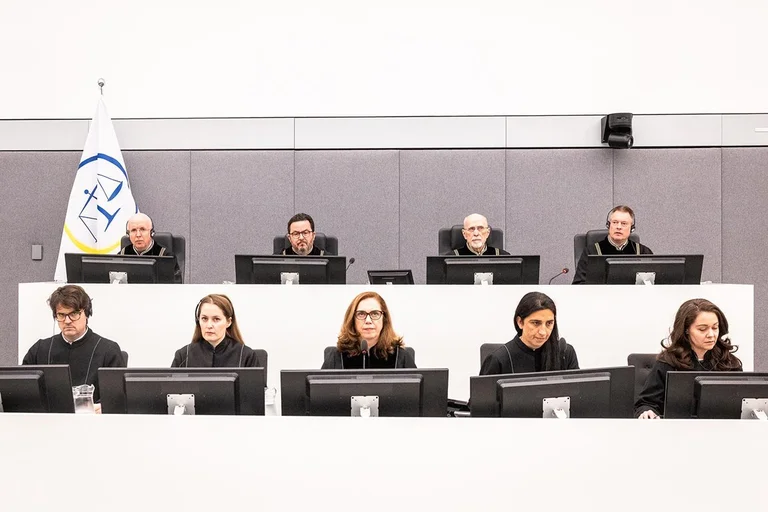
The Kosovo Specialist Chambers (officially, the Kosovo Specialist Chambers and Specialist Prosecutor’s Office) handed down its verdict on September 16, 2026: former Kosovo President Hashim Thaçi and Jakup Krasniqi were each sentenced to 25 years in prison, Kadri Veseli to 18 years, and Rexhep Selimi to 13 years. All four, former senior leaders of the Kosovo Liberation Army (KLA), were found guilty of war crimes (arbitrary arrest and detention, cruel treatment, torture, and murder) committed during the 1998–99 Kosovo War. However, they were acquitted of the crimes against humanity that had also been charged against them, as the court found there was no evidence of attacks against the civilian population.
By rejecting these latter charges, the tribunal may have done a useful service. Nevertheless, the injustice of creating a special tribunal to try only the crimes of one of the warring parties—those of the resistance, the struggle for liberation and independence—remains. The crimes of the other side—those of the occupier, the Serbian army, special services, and paramilitaries—would never be tried. Yet they were responsible for by far the greatest number of victims (the Kosovo War is estimated to have claimed around 13,000 lives, including approximately 9,000 Albanian civilians; 1,500 to 2,000 KLA fighters are reported to have been killed). Some of these well-documented crimes could be classified as crimes against humanity, or even, in the case of the expulsion of more than a hundred thousand Albanians from their villages in late summer or early autumn 1998 (humanitarian organizations at the time put the figure at between 200,000 and 300,000), as the crime of genocide.
This injustice—the creation of a special tribunal solely to try the crimes of the separatists—is the product of a manipulation and influence operation orchestrated by Russian intelligence services. The tribunal’s latest ruling offers an opportunity to revisit the history of its creation.
An operation carried out by the Russian special services.
Formally, the process that led to the creation of the Special Tribunal began in April 2008 with the submission of a motion to the Parliamentary Assembly of the Council of Europe (PACE). It was entitled “Inhuman treatment of persons and illicit trafficking in human organs in Kosovo.” Its author was a Russian, Konstantin Kosachev. He is currently Deputy Speaker of the Federation Council (Senate), and a member of the United Russia party. Since March 9, 2022, he has also been on the European Union’s list of Russian nationals sanctioned by the EU. The motion was signed by 16 other parliamentarians, most of whom were representatives from the former USSR or Central European countries.
The aim of the operation was to have an investigative report adopted at the plenary session of the Parliamentary Assembly of the Council of Europe (PACE), one that would substantiate the claims in the motion. To achieve this, it was necessary to appoint an investigating rapporteur, someone considered independent and of good character. Former Swiss magistrate Dick Marty was considered the ideal candidate. His report, presented at the plenary session in early 2011, was adopted by an overwhelming majority of those present. It was the spectacular success of this operation that set in motion a process that culminated in the creation of the Special Tribunal in 2015. Without Marty’s report, there would never have been a Special Tribunal for Kosovo.
To understand how all this worked, we will first make three preliminary observations:
The first concerns the allegations of “human organ trafficking.”
These accounts (also called “narratives”) are typical of operations carried out by Russian or Serbian special services. Such accusations can be found in all wars (in Bosnia and Kosovo, by Serbia; in Chechnya, Georgia, and Ukraine, by Russia). The aim is to portray those who take up arms against the country as guilty of heinous crimes that immediately provoke outrage. At the same time, the aim is to dehumanize them: by the nature of their crimes, they do not belong to humanity. Their crimes are crimes against humanity. The causes they fight for (rights, independence, freedom) are obscured by the horrors of which they are accused. Among these narratives, three are classic examples:
“They take organs from prisoners / children / the wounded.”
This narrative has been used by Serbs against Bosnian Muslims and Kosovo Albanians, and by Russians against Chechens, Georgians, anti-Assad Syrians, and Ukrainians.
“They have clandestine laboratories / secret hospitals.”
This narrative has been used against Chechens (“torture hospitals”), Georgia (the Lugar laboratory), and Ukraine (biological laboratories).
“They sell bodies/organs/children to the West.”
This is the classic anti-Western narrative: “The West buys the organs of the poor.” It appears both in the Serbian narrative against Albanians and in the Russian narrative against Chechens. The Russian military press (Krasnaya Zvezda) reported, in 2000–2001, the existence of an “organ market” supplied by the removal of organs from Russian prisoners, operating in Grozny and Baku.
These narratives are generally associated with manipulation tactics that lend them credibility. They are effective because they combine a horror that leaves no room for public indifference: the story shocks, leaves a lasting impression, and is impossible to verify. Those who take organs from prisoners and trade them are portrayed as monsters. There is a moral inversion: the victims (Kosovo Albanians, Chechens, Ukrainians) are turned into executioners, or even, in the case of the latter, into “Nazis.” If the enemy is a “human organ trafficker,” then their state is illegitimate. This was the message that Kosachev’s motion sought to convey, two months after Kosovo declared independence.
The second point concerns the Parliamentary Assembly of the Council of Europe (PACE) and the particular interest it may have held for the Russian special services.
The Parliamentary Assembly of the Council of Europe (PACE) is made up of representatives (usually members of parliament or senators) from the Council of Europe member states. It is neither a state parliament nor a parliament of the European Union. It has no legislative powers. It meets in plenary session for only one week, four times a year. In principle, it deals only with issues related to respect for human rights. Its only power is to adopt resolutions or recommendations addressed to member states. Today, since Russia’s expulsion on March 16, 2022, following the invasion of Ukraine, the Council of Europe has only 46 members. They have a total of 306 representatives in PACE.
When Kosachev submitted his motion in April 2008, Russia had already been a member of the Council of Europe for around twelve years (it was admitted in 1996). Serbia was a newer member, admitted only in 2003 as the State of Serbia and Montenegro—two years after Slobodan Milošević was handed over by the new Serbian government to the International Criminal Tribunal for the former Yugoslavia (ICTY). Serbia alone retained legal continuity of Council of Europe membership in 2006, after Montenegro’s independence.
PACE’s particular appeal to the Russian intelligence services was that it served as a powerful launch platform for some of their disinformation operations. They could easily arrange for investigative reports in favor of Russian positions to be adopted, with the imprimatur of the Council of Europe. All they had to do was submit (or arrange for someone to submit) a motion calling for an investigation into an issue related to their influence objectives. And then they would have what is generally called, in a tradition attributed to Lenin, a “useful idiot” appointed as investigating rapporteur.
It should be said that the powers of a rapporteur appointed by the Parliamentary Assembly of the Council of Europe (PACE) to investigate a particular issue have nothing in common, for example, with those held by Carla Del Ponte, chief prosecutor of the International Criminal Tribunal for the former Yugoslavia (ICTY). A PACE investigating rapporteur is not a prosecutor. They have no judicial powers: no authority to conduct searches, coercive interrogations, or demand documents, or automatic access to state archives. They are not given any special police or logistical protection during their mission. They depend entirely on the voluntary cooperation of states, international institutions, and witnesses. Their human resources are limited to a small administrative team. They are not a task force. They have a committee secretary (a Council of Europe official). This is their main support person, who helps them organize hearings, arrange travel, compile documents, and draft preliminary versions of the report. They may summon alleged witnesses, police officials, and even government ministers. But no one is obliged to appear. All of this is to say that a PACE investigative report is unlikely to be anything more than a political report. It has absolutely no legal weight as a judicial investigation.
The third point concerns Dick Marty’s appointment as rapporteur.
There is no doubt that, when Konstantin Kosachev submitted his motion, the matter had already been settled: Dick Marty, a former prosecutor, elected as a “liberal-radical” from Ticino, Switzerland’s representative to PACE, would be appointed by the Committee on Legal Affairs and Human Rights as rapporteur in charge of the investigation.
The man had already demonstrated his flexibility. At the end of 2005, he submitted a motion, signed by fourteen other parliamentarians: “Alleged secret detentions and unlawful inter-state transfers of detainees involving Council of Europe member states”. He was then appointed rapporteur by PACE’s Committee on Legal Affairs and Human Rights. His report, dated June 12, 2006, caused a sensation: it revealed the existence of “secret CIA prisons” in Europe.
In fact, there was nothing truly new in the report. The essential points had already been revealed in a Washington Post article on November 2, 2005. The CIA had detained jihadists, for varying periods in transit, in Poland, Romania, and Lithuania, on their way to Guantanamo. What mattered, apart from the accusation against American power, was putting countries that had recently joined NATO and the European Union and had shown hostility toward Putin’s Russia in a difficult position over human rights violations.
Remarkably, after being appointed rapporteur on “illicit trafficking in human organs in Kosovo,” and before completing his investigation and submitting his report, Dick Marty was tasked by the Parliamentary Assembly of the Council of Europe with a fact-finding mission on the situation in Chechnya, Ingushetia, and Dagestan. His report on the matter, “Legal remedies for human rights violations in the North Caucasus region,” dated June 4, 2010, enabled him to thank the security and justice officials of these republics of the Russian Federation, where he had been able to conduct his investigation in the best spirit of cooperation, while also saying—independence being paramount—that “the situation of almost total impunity for crimes committed by law enforcement officials in the context of counter-terrorism operations appears to continue.”
The aim was to show that normalization in Russia’s Caucasus provinces was progressing well. The draft resolution presented by Dick Marty praised “the impressive efforts undertaken by the authorities of the Russian Federation and the Chechen Republic to rebuild the cities.” The implication was that, if problems persisted, they did not stem from the false-flag Chechen attacks carried out by the FSB that had set the Caucasus ablaze, but from inappropriate or disproportionate responses by security forces to the “cowardly and heinous acts” of extremist groups.
A favorable context for an operation directed against Europe and NATO.
The Russian special services’ operation was undertaken in a particular context: Kosovo’s declaration of independence on February 17, 2008. The Russian parliamentarian’s motion was submitted to PACE just two months later.
European countries at the time were hesitant, unsure how to act regarding recognition of Kosovo’s independence. Public opinion was divided. Even today, for reasons apparently linked to domestic politics, a country like Spain still does not recognize Kosovo’s independence. And it is not alone. Four other European Union countries have yet to recognize it: Greece, Cyprus, Romania, and Slovakia. This brings the total to five out of twenty-seven.
It should be recalled that Kosovo had been under United Nations administration since the end of the war in early summer 1999, following the withdrawal of the Serbian army and security forces. Its status as part of Serbia (then the “Federal Republic of Yugoslavia”) was not in question. Until 2008, under international law, Kosovo was considered Serbian territory. In reality, it had gradually freed itself from the tutelage of the United Nations Interim Administration Mission in Kosovo (UNMIK). And, protected by an international armed force under NATO command (KFOR), it had taken control of its own destiny, with a democratically elected parliament and government. Kosovo’s Parliament’s declaration of independence on February 17, 2008, had the support of the U.S. government and several European governments, including France’s.
Putin was furious. As early as his speech in Munich in February 2007, at the Security Conference, he had launched an openly hostile turn against American power and a Europe he considered subservient. At the time, it was believed he was reacting to the expansion of the European Union and NATO to include Central Europe and the Baltic states. In reality, he was voicing resentment stemming from NATO’s intervention against Serbia in 1999. Russia had been unable to oppose it. The Americans (then under President Bill Clinton) and their NATO allies had bombed Serbia for 78 days (from March 24 to June 10, 1999), without a UN mandate. In the end, they had forced Milošević to withdraw, compelling him to pull the army and security forces out of Kosovo.
Putin’s Munich speech against a “unipolar world” openly referred to what had happened in Kosovo in 1999. Even before a UN Security Council meeting, where the Russians would have vetoed a resolution, the Americans launched a bombing campaign against Serbia that changed the world order to Russia’s detriment. Its ally, Serbia, emerged weakened. Kosovo was to Serbia what Chechnya was to Russia. The Americans and Europeans had managed to separate Kosovo from Serbia. Now, supposedly, they were trying to separate Chechnya from Russia by supporting the “terrorists” there. A “unipolar” world, according to Putin, would mean insecurity. The restoration of Russian power would mean a return to balance and security.
Putin wanted revenge against NATO and Europe. In 1999, at the time of the attacks on Serbia, European public opinion was divided. It remained so nine years later, after Kosovo declared independence. European states were unable to adopt a common position. The opportunity had come.
The timely publication of Carla Del Ponte’s book.
“The Assembly considers it necessary to examine cases of inhuman treatment of persons and illicit trafficking in human organs in Kosovo, as described in Carla Del Ponte’s memoirs.” This is how the motion, in the form of a resolution submitted to PACE by Konstantin Kosachev, begins. A few lines below, it says: “According to information provided by Ms Del Ponte, these organs were then transported from Rinas Airport in Tirana to clinics abroad, for implantation in patients who paid.”
To say the least, the book by the former chief prosecutor of the International Criminal Tribunal for the former Yugoslavia (ICTY)—co-written with Chuck Sudetic—was published at a very convenient time. The first edition, in Italian, was published in April 2008. Kosachev’s motion was submitted just a few days later.
Carla Del Ponte was appointed head of the ICTY in August 1999, after the Serbian army and security forces withdrew from Kosovo. She remained in the position until the end of 2007. What does she say in her book? She says that, as soon as she took office at the end of 1999–2000, she was made aware, through reports from various journalistic sources, some more credible than others, claiming that “hundreds” of Serbian prisoners, still being held in northern Albania, had been executed to supply a human organ trafficking network. Some of these reports specified that the organs were taken in a “yellow house” in Burrel, less than 100 kilometers from Tirana Airport. Considering some of these “sources” credible, Carla Del Ponte ordered an on-the-ground investigation in Albania in 2003. She found nothing conclusive.
The former prosecutor seems to believe that the case of “human organ trafficking” did not receive the attention it deserved. It appears to have remained unresolved. The problem is that she treats it in a book focused mainly on her “hunt” for war criminals (the French edition is titled “The Hunt: War Criminals and Me”). She mentions cases in which the facts are established and severe sentences have been handed down (against Mladić, Karadžić, Milošević, etc.), alongside a case for which she has no evidence. Although she refers to “human organ trafficking” as “according to our sources,” readers may be tempted to equate everything, what was prosecuted and what was not, because of a lack of evidence. This is what creates the ambiguity in the book and what Kosachev exploits. What is “according to our sources” in Carla Del Ponte’s text becomes “according to Carla Del Ponte.”
Florence Hartmann, former spokeswoman for the ICTY chief prosecutor (and former Le Monde journalist), perfectly summarized the problem in an article in the newspaper Le Temps on April 16, 2008:
“By choosing in her memoirs to mix genres and place tried crimes, that is, indisputably proven crimes, alongside these unverified allegations from witnesses whose identities she does not know, Carla Del Ponte fuels confusion between rumor and fact.”
In the spring of 2008, even after being revived by the former prosecutor, the case of “illicit trafficking in human organs in Kosovo” was still only a rumor. A new and spectacular event was needed to lend credibility to this story.
The “Medicus” clinic case
This event took place in November 2008. A scandal with global repercussions erupted: the Medicus clinic in Pristina, Kosovo, was found to be at the center of an international human organ trafficking network. Kidneys were taken from poor people in need in exchange for laughable sums. These kidneys were then immediately transplanted into wealthy patients willing to pay around $100,000. Both the “sellers” and the recipients were foreigners who had traveled to Kosovo specifically for their operation. They left as soon as they had recovered sufficiently.
It all began on November 4, 2008, when a passenger bound for Istanbul fell ill at Pristina Airport. He was a young Turk, Yilmaz Altun, born in 1984. Examined by a doctor, he learned that one of his kidneys had been removed at a clinic in the city. He had “sold” it and was to be paid for it upon his return to Turkey. That same day, police from the United Nations Interim Administration Mission in Kosovo (UNMIK) raided the “Medicus” clinic, where they found an Israeli patient, Bezalel Shafran, born in 1934, receiving post-operative care. The young Turk’s kidney had been transplanted into him.
The clinic was immediately closed. Documents were seized. They showed that similar operations had repeatedly been performed on foreign patients over the previous months. Thus began the “Medicus” case. It lent extraordinary credibility to the accounts of “human organ trafficking in Kosovo” from late 1999 and early 2000. Moreover, it suggested continuity: the same KLA officials who were alleged to have organized the trafficking after the war, now in power in Pristina, were supposedly behind the criminal activity at the “Medicus” clinic.
In the following months, the investigation conducted by the European Union Rule of Law Mission (EULEX)—which took over UNMIK’s responsibilities for police and justice—revealed that the surgeon wielding the scalpel, both to remove kidneys and to transplant them, was Yusuf Erçin Sönmez, a Turkish-Israeli citizen born in Turkey in 1957. It also revealed that another Turkish-Israeli, born in Turkey in 1950, Moshe Harel, was the organizer of the patients’ “trips” and the “cashier” of the criminal organization. He had bought Yilmaz Altun’s plane ticket. He had accompanied him on the same flight from Istanbul to Pristina. It was into his bank account that $90,000 had been transferred by a member of the family of the Israeli patient who had received a kidney from the young Turk.
The indictment by EULEX Special Prosecutor Jonathan Ratel established that 24 kidney removals and the same number of transplants had been performed at the Medicus clinic between March and early November 2008. At the end of the trial, on April 29, 2013, Lutfi Dervishi, a urologist and owner of the Medicus clinic, was sentenced to eight years in prison, while his son, Arban, the clinic’s director, was sentenced to seven years and three months. Three anesthesiologists received sentences ranging from one year suspended to three years in prison. All five are Kosovo Albanians. No verdict could be handed down against Yusuf Erçin Sönmez or Moshe Harel, both of whom were fugitives. Clearly, they were being protected. They were briefly detained in Turkey or Israel, on the basis of Interpol Red Notices, but were ultimately released, as both countries refused to extradite them.
Our hypothesis is that the “Medicus” clinic case is part of a manipulation by the Russian special services, launched with Kosachev’s motion in PACE. It was conceived and planned before 2008. The arguments in favor of this hypothesis are as follows:
The first argument concerns the personality of Yusuf Erçin Sönmez.
Investigators quickly realized that “Dr. Yusuf,” listed in the Medicus clinic’s records, was Dr. Yusuf Erçin Sönmez. He had long been known for performing kidney removals and transplants in violation of medical ethics and the law. When his involvement in the Medicus clinic case became known, the international press called him “Dr. Vulture” or “Dr. Frankenstein.” He had previously been arrested several times in Turkey for violating the law on the removal and transplantation of kidneys. As early as 1998, according to The Guardian, Turkish television journalists had tricked him by posing as people willing to have a kidney removed. They revealed that he had seven patients, mainly Israelis, waiting for transplants. Yusuf Erçin Sönmez was subsequently banned from practicing in Turkey’s public health sector.
“Dr. Vulture” could hardly have failed to be contacted by Russian or Serbian intelligence services as early as the late 1990s, when their influence networks had been tasked with spreading rumors about human organ trafficking allegedly carried out by Chechen or Kosovo Albanian separatists. He was also known for performing kidney operations in Baku. Hence, perhaps, the rumor mentioned earlier in the Russian military press about an “organ market” for Russian prisoners in that city.
The second argument in favor of the hypothesis of Russian special services’ manipulation is that the hub from which the criminal organization operated was not in Pristina, Kosovo, but in Turkey or Israel.
The “Medicus” clinic was, in fact, only one of the platforms where kidneys were removed and transplanted by Yusuf Erçin Sönmez’s team. Everything was organized in advance from a hub (Istanbul? Tel Aviv?) where “candidates” for kidney sales were recruited, the compatibility of “donors” and “recipients” was checked before they left for Pristina, and the operations were also scheduled. According to Jonathan Ratel, EULEX’s special prosecutor, “Medicus was one of the clinics in a network involving Sönmez, Harel and others,” […] “We have found clinics in Azerbaijan and other countries, and we believe there may be one in South Africa as well.”
The third argument is based on an examination of the geographical area from which the victims who underwent kidney removals at the “Medicus” clinic came.
According to Special Prosecutor Jonathan Ratel, the identified victims whose kidneys were removed at the Medicus clinic between March and November 2008 were “Israelis, Turks, Kazakhs, Belarusians, Russians, Ukrainians or Moldovans.” In other words, they came from the former Soviet Union, Israel, or Turkey. This shows that the intelligence services could not have been unaware of the network’s reach within their sphere of influence. There is every reason to believe they were connected to it.
Finally, the fourth argument concerns the timing of the kidney operations at the “Medicus” clinic.
Consultation of the indictment shows that “Dr. Yusuf’s” first operation was on March 8, 2008. He appears to have removed a kidney from “Tasim” that same day and transplanted it into “Bamus” (the surnames are unknown and the individuals have not been identified). The next two operations were not performed until May 11 and 15, 2008 (each time involving the removal of a kidney and a transplant). The pace increased in June and then stabilized over the following months until the end of October 2008, reaching a total of 24 kidney removals and 24 transplants.
In conclusion, it appears that “Dr. Yusuf’s” criminal activity at the “Medicus” clinic was recent. It began after Kosovo declared independence. There is no evidence of continuity with the alleged human organ trafficking that had taken place after the war in 1999–2000.
Clearly, the criminal activity at the “Medicus” clinic was halted when the Russian special services deemed it necessary. When they decided that the time had come to expose the “scandal.” The story of the young Turk who collapsed at Pristina Airport and led UNMIK police to uncover a “human organ trafficking operation” in Kosovo does not hold up. The police had been deliberately informed, probably as early as October 31. They had been ordered to arrest Ylmaz Altun and Moshe Harel 11 before they boarded a plane together on November 4.
It is worth mentioning in passing that, for the most part, the names of the identified victims indicate an origin in the former USSR (Akhmedov, Yankulov, Ruskalenko, Shevdako, Avdukova, Pugachev, etc.). The young Turk, Ylmaz Altun, arrested at Pristina Airport on November 4, 2008, ultimately appears as one of the few Turks on the list. Perhaps it is no coincidence that the Russian special services chose him to conclude the series of kidney removals in Pristina. He told investigators he had been recruited by a man named Ismail two months earlier. Ismail had promised him $20,000 for the removal of one of his kidneys. It was Ismail who had put him in contact with Moshe Harel. The last victim of “human organ trafficking” could not have been someone with a name like Pugachev or Ruskalenko. They would have had to tell investigators they were recruited by someone named Popov or Ivanov. The “Russian connection” would have been too obvious.
It is worth mentioning in passing that most countries agreed to cooperate with the investigation led by Jonathan Ratel, the EULEX mission’s special prosecutor. Russia, the country of origin of several of the identified victims, refused to cooperate, while claiming to be a victim of “human organ trafficking in Kosovo.” It therefore requested Moshe Harel’s extradition, knowing full well that it had no chance of obtaining it.
Finally, a few words about Dr. Lutfi Dermishi, the owner of the “Medicus” clinic. It is highly likely that he fell into a trap set by “Dr. Yusuf,” with the support of the Russian special services. According to the investigation report, he met Yusuf Erçin Sönmez at a urology conference in Istanbul in 2005 or 2006. Later, perhaps only in early 2008, he received a proposal he should have refused. This supposedly led to an experiment on March 8. Then, beginning in May, it became an “industrial” practice of organ removal and transplantation, in which “Dr. Yusuf” always wielded the scalpel. He clearly gave in to the lure of profit. His severe sentence is not up for debate. He has inflicted considerable damage on his country and on the former leaders of the Kosovo Liberation Army, who are currently imprisoned in The Hague.
Marty’s report, the top floor
Let us now turn to Dick Marty’s report, “Inhuman treatment of persons and illicit trafficking in human organs in Kosovo,” adopted by PACE in early January 2011. Let us say at the outset: it is precisely what we feared most, based on the motion submitted by Kosachev in April 2008. It repeats—as expected—the Serbian special services’ narrative concerning the “Drenica Group,” which was allegedly at the center of an international network of drugs, arms, and prostitution and had taken control of the Kosovo Liberation Army (KLA). It also repeats the narrative of “reliable sources” about “human organ trafficking” involving organs taken from Serbian prisoners, found in the book by Carla Del Ponte and Chuck Sudetic. But it goes much further on both points:
First, regarding the classic narrative that rebels are nothing more than bandits or mafia criminals, found both among Serbs in relation to Kosovo and Russians in relation to Chechens, it takes on a new dimension in point 58 of Marty’s report:
“We have established that the head of this Drenica Group or, to use the specific terminology of organized crime networks, its ‘godfather,’ was none other than a well-known figure in local political life and perhaps the KLA’s most internationally renowned personality, Hashim Thaçi.”
Dick Marty is no longer content with accusations or rumors based on “sources” that no one can verify. He declares, as if conducting a judicial investigation: “We have established that…” It should be said that by the time the report was presented, Hashim Thaçi had been Prime Minister since January 2008. He was the person who declared Kosovo’s independence on February 17, 2008.
We see the hand of the Russian special services in Dick Marty’s statement. What is at stake is the legitimacy of Kosovo’s independence and the legality of the new state on the international stage. If the head of the Kosovar government is the “godfather” of a mafia, then Kosovo cannot be recognized as an independent state.
Marty’s report also goes far beyond what had been circulated up to then about “human organ trafficking” allegedly carried out by KLA leaders, since it simply invents a new detention center for Serbian prisoners from whom organs were allegedly taken: Fushë-Krujë, a stone’s throw from Rinas, where Tirana Airport is located.
Before Marty’s report, no document mentioned this center in Fushë-Krujë. Neither Del Ponte and Sudetic’s book, nor the UNMIK and ICTY investigation in 2004–2005. The team of forensic scientist Baraybar searched only the infamous so-called “yellow house” in Burrel, where it found nothing conclusive.
It should be said that the rumors spread by the Serbian special services had a weakness. This weakness had been pointed out, including in some Serbian media after the publication of Del Ponte and Sudetic’s book: kidney removal had to take place in a completely sterile environment, in the immediate vicinity of an airport if the kidney was intended for a long-distance transplant. Burrel’s “yellow house” seemed unsuitable. Florence Hartmann had discussed all of this in her April 2008 article.
This weakness became even more apparent with the indictment by EULEX Special Prosecutor Jonathan Ratel, which revealed how “human organ trafficking” actually worked: on the same day, in the same facility, “Dr. Yusuf” removed the kidney from the “donor” and transplanted it into the recipient. He had ensured their compatibility long before they arrived in Kosovo.
It was in this context that Dick Marty could state, with extraordinary confidence, about ten years after the events, that he had “discovered,” during his investigation, the location in “Fushë-Krujë” where “the small group of prisoners selected by the KLA would have met their deaths.”
This place is said to be “several hours’ difficult drive from Rripe or Burrel.” It is said to consist of a “safe house” and a “clinic.” The former is said to be a house whose owner, “a member of the Albanian ethnic group, was alleged to have both clan ties and links to organized crime with members of the Drenica Group.” The clinic is supposedly nearby, but the report provides no details about its name or location.
The report says that “once it was confirmed that the surgeons responsible for the transplanting [sic] were on site and ready to operate, prisoners were allegedly taken one by one from the ‘safe house,’ immediately executed with firearms by a KLA agent, and their bodies swiftly transported to the clinic where the operation was performed.”
It adds that “According to sources, the Fushë-Krujë axis was chosen to host these facilities because of its proximity to the main airport serving Tirana. The facilities on this platform in the organ trafficking network—the ‘safe house’ and the clinic used for the operations—were therefore easily accessible both for receiving international visitors and for transporting organs.”
Here, too, we see the (heavy) hand of the Russian special services. Clearly, they fabricated this narrative about a detention center (a death camp) for Serbian prisoners, of which no one had heard before. The text of the narrative (points 159 to 174 of the report) is also characterized by its awkwardness and certain confusions that may indicate a poor translation from an original Russian text. We noticed, for example, the reference to “surgeons responsible for the transplanting” [sic], when it should in fact have referred to the surgeons responsible for removing the organs…
Chuck Sudetic, the other “useful idiot”?
Perhaps this “shell” should be viewed as a clue. Chuck Sudetic would be the other “useful idiot” in the Russian special services’ operation concerning “human organ trafficking in Kosovo.”
Given the importance of the “revelations” attributed to Carla Del Ponte, both in Kosachev’s motion and in Marty’s report, one cannot help but question the former ICTY prosecutor’s urgency in publishing her memoirs in the spring of 2008. She left her post at the ICTY at the end of 2007 and immediately set off for Argentina, where she had just been appointed Switzerland’s ambassador. By the end of March 2008, the manuscript had been submitted to the publisher Feltrinelli.
How can such an achievement be explained? She did not write the book herself. At least, not for the most part. She acknowledged this on the cover, identifying Chuck Sudetic as co-author. Nevertheless, everything was done to make it appear to be a personal work, a memoir. The first edition was in Italian, her native language (Carla Del Ponte is from Ticino). The subtitle of the book, “La caccia” (“The Hunt”), was “Io e i criminali di guerra” (“War Criminals and Me”). This is awkward in both Italian and French. On the later French edition, the cover reads “Les criminels de guerre et moi” (“War Criminals and Me”).
We should point out another peculiarity. It would betray the existence of an original Russian version of the report. In “B – Statement of Reasons,” point 1, we find the sentence: “Ms Carla Del Ponte published a memoir in collaboration with Chouk Sudetic.” The first name is actually “Chuck,” which in the United States, where Chuck Sudetic was born, can be considered a shortened form of Charles/Charlie (for example, Chuck Berry). But it is highly likely that Sudetic’s parents, who were of Yugoslav origin, gave their son, born in the 1950s, this name in reference to Chuk (“Chuk” in Russian), the hero of a very well-known fairy tale from the Stalinist era in the Soviet Union (which was adapted into a film in 1953). And there is no doubt that Chuck Sudetic was called “Чук Судетич” (phonetically “Tchouk Sudetich” in French) when he was a student at the Pushkin Institute in Moscow in 1978. Readers can verify with Google Translate that when they enter “Чук,” it returns “Chouk” in French and “Chuck” in English. This would explain why the English version of Marty’s report has “Chuck Sudetic,” while the French version has “Chouk Sudetic”…
Chuck Sudetic was a journalist for the New York Times, where he covered the Yugoslav wars (1990–1995). He later worked as an analyst at the ICTY and as a senior writer at the Open Society Institute. This means that when Carla Del Ponte took charge of the ICTY in the summer of 1999, he was the person with the archives and contacts among journalists on the ground—the “famous reliable journalistic sources”—who had “given her the information” about “300 Serbs captured and transferred to clandestine prisons in Albania.”
The Open Society Institute organized a debate in 2009, during which Sudetic explained that he had organized the notes Carla Del Ponte had recorded on a dictaphone over eight years. She did not speak English and wanted a highly narrative, American-style book. Carla Del Ponte herself said in a Swiss interview in 2008: “I tell the story, Chuck writes it.” This explains the speed with which the memoirs were published. Should we conclude that the book was commissioned by Russian intelligence? Of course, we have no proof. Only clues. The mention of “Chuk” in Marty’s report is certainly intriguing. A sign from those involved in the manipulation?
Setting up a diabolical machine.
The objective of the Russian special services’ operation, at the time Kosachev’s motion was submitted to PACE, was, as we have said, to have it adopt a report on “human organ trafficking in Kosovo” that would portray Kosovo as an artificial and illegitimate state and thereby divide Europeans and weaken the European Union.
Marty’s report was not intended for intellectual debate. From beginning to end, it was a political report designed to appeal to people’s sensibilities and emotions. It was adopted by the Parliamentary Assembly of the Council of Europe by a very large majority. 169 representatives of Council of Europe member states voted in favor. There were only 8 votes against and 14 abstentions. All eleven French representatives, from across the political spectrum, voted in favor. All the Germans, all the Belgians, all the Dutch, and so on, voted in favor. One may lament such naivety, such a lack of critical thinking, or simply such caution on the part of our representatives in the face of what was a low-level manipulation. But the result is clear: the intelligence operation was a complete success. Perhaps even more so than its instigators had anticipated.
Because it had consequences that, a priori, should have seemed impossible. It was a Parliamentary Assembly of the Council of Europe resolution, based on Marty’s report, and the emotion the report stirred in public opinion that led the European Union and the United States to create, in September 2011, a “Task Force” (Special Investigative Task Force, or SITF, according to its acronym), in other words, a “Special Investigative Group,” and thus an infernal machine.
It is important to understand how things unfolded. Under friendly pressure from its allies, Kosovo’s Parliament was persuaded to adopt, in May 2012, a law on cooperation with the Task Force. The law was intended to enable the Task Force to conduct an independent criminal investigation into the allegations contained in Marty’s Report. Kosovo had a direct interest in this investigation. It was supposed to demonstrate that Marty’s Report was fabricated. The composition of the Task Force, made up exclusively of professional European and American magistrates and judicial staff, was a guarantee of independence. The prosecutor, the head of the Task Force from September 2011 to August 2014, was Clint Williamson, former U.S. Ambassador-at-Large for War Crimes Issues.
Based on the Task Force’s initial findings and under pressure from the European Union and the United States, Kosovo’s Parliament adopted a constitutional amendment in August 2015, establishing the Kosovo Specialist Chambers and the Kosovo Specialist Prosecutor’s Office (Law No. 05/L-053 – Article 162 of the Constitution), in other words, the Kosovo Specialist Chambers. This court is understood to be an institution of Kosovo, relocated to The Hague for reasons of security (witness protection), independence, and funding (provided by the European Union). Once again, Kosovo had a direct interest in this, for the same reasons as before: to uncover the truth about the alleged “human organ trafficking in Kosovo.”
What had happened in the meantime? The magistrates of the Task Force, in contact with the ICTY, which was still operational at the time, became aware of the many cases of war crimes or crimes against humanity related to Kosovo that had been closed or remained pending. But above all, they focused on the allegations in Marty’s Report.
Of course, to have any chance of making progress in the case of “human organ trafficking in Kosovo,” it was necessary to be able to verify the “sources” that had informed the report and, to do so, to hear from its author. The Task Force prosecutor, Clint Williamson (SITF), contacted Dick Marty as early as 2012, asking him to cooperate. But he did not respond. The reasons for this are quite understandable. But it is interesting to see how he was able to evade a summons from the Task Force prosecutor, whose powers are theoretically extensive. There are three reasons for this:
The first reason is that the Task Force (SITF), like EULEX, is a mission in Kosovo. Marty is a Swiss citizen, resident in Ticino, Switzerland. A summons from Kosovo is not enforceable in Switzerland without mutual legal assistance. Switzerland never received a binding letter rogatory.
The second reason was the protection Marty enjoyed at the time under the Agreement on Privileges and Immunities of the Council of Europe (Articles 14 and 15). Secretary General Thorbjørn Jagland refused to waive this immunity. Without its removal, no legal enforcement was possible. Clint Williamson himself acknowledged this in 2014, using diplomatic language: “Mr. Marty cooperated to the extent that he considered compatible with his obligations.” In other words, he said nothing about his “sources.”
The third reason is “source confidentiality.” Marty said: “If I give the names of my drivers, bodyguards, Albanian ‘organizers’ who told me about Fushë-Krujë and Rripe, they will be killed.”
Legally, Dick Marty was not “evading justice.” He was beyond reach. This is why the Task Force had to complete its report in 2014, stating that there had been killings and disappearances—which was already known—but that there was insufficient forensic evidence of organ trafficking. All of this was due to the lack of access to the “sources” behind Marty’s Report.
Ultimately, this is what made the Special Tribunal for Kosovo a diabolical machine from the outset. It would not have existed without the successful manipulation by the Russian special services. It should not have been trying a case of “human organ trafficking” for which there is no evidence. But it was a massive machine being set in motion, with its officials dispatched from various European Union countries and America. It needed “something to deal with.” In the absence of evidence of organ trafficking, it had to deal with war crimes for which the leaders of the Kosovo Liberation Army would be personally responsible. This was intended to poison relations between the European Union and the new state of Kosovo, and perpetuate divisions among Europeans. Once set in motion, the machine continued to cause damage on its own. It no longer even needed to be fueled by the disinformation of the Russian special services that had prompted its creation.
This diabolical machine has been operating for more than a decade now. The verdict delivered by the Special Tribunal on September 16, 2026, should come as no surprise. It was known that the indictment against Hashim Thaçi and three other former Kosovo Liberation Army leaders, made public on November 4, 2020, contained absolutely nothing about “human organ trafficking.” No evidence had been retained. There could therefore be no convictions relating to the allegations in Marty’s Report. The only thing to fear was severe sentences for war crimes, for which the leaders of resistance organizations are inevitably guilty, individually or collectively, in a war: mistreatment of prisoners, torture, extrajudicial executions of “traitors” and “informers,” and settling scores after liberation. That is exactly what happened.
But is this justice? The answer is no. Not because these crimes were not committed, but because it is not for a court composed mainly of foreign judges to try them. The Kosovo Specialist Chambers, established under Kosovo law and relocated to The Hague, had its purpose in trying crimes against humanity, terrible crimes such as those associated with trafficking organs involving prisoners. Since no evidence of such crimes could be established, it lost its legitimacy.
For more than twelve years, Russia has been waging a war of aggression against Ukraine. This war has now reached a new level of intensity, marked by the daily horror of missiles and bombs targeting the civilian population (massive and repeated crimes against humanity). Russia is waging a hybrid war against Europe.
It has been demonstrated that the European Union was deceived by one of the most sophisticated manipulation and disinformation campaigns by the Russian special services since the fall of the communist regimes. It is time to react. A sign of our willingness to stand together could come from Pristina.
We know there will be an appeal. Can we allow this diabolical machine to cause further damage? Can we accept that it remain a source of division among Europeans? A sign of weakness for the European Union?
Move the appeal trial to Pristina?
The Special Court, as we have said, is an institution of Kosovo. It is currently based in The Hague. What we propose is moving it to Kosovo.
The “Specialist Chambers” are linked at every level to Kosovo’s judicial system: the Basic Court, Court of Appeals, Supreme Court, and Constitutional Court. They operate in accordance with Kosovo law. Relocating them to Pristina poses no insurmountable legal problems.
Moshe Harel was held in pre-trial detention for several weeks in Kosovo, then released on bail and placed under house arrest. He used this opportunity to escape permanently.








