
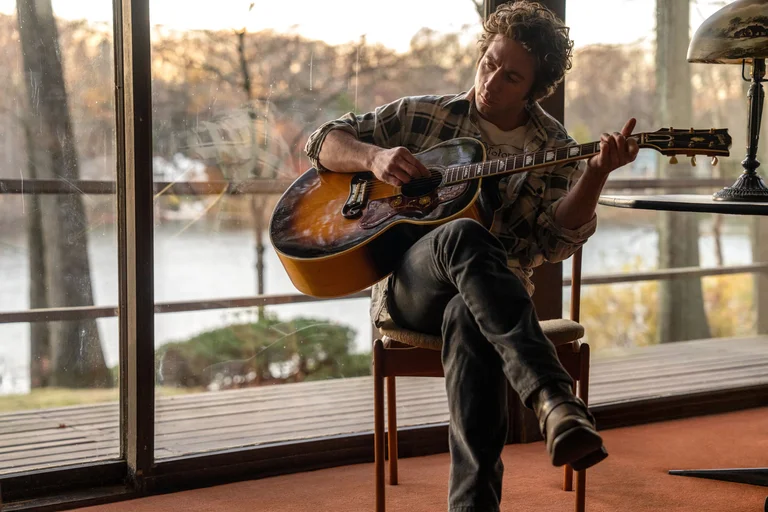
Two years ago, director Scott Cooper and writer Warren Zanes were invited to Bruce Springsteen’s home in New Jersey. In a sense, the meeting came as a surprise. As Cooper notes, Springsteen was known for “saying no to every attempt to make a film about his life since 1986”. But something in the screenplay Cooper had written seemed to pique his interest. It was based on Zanes’s book “Deliver Me from Nowhere”, not a classic, comprehensive biography, but a meticulously researched story about the 1982 album “Nebraska”, which Zanes calls “the greatest left turn ever made by someone who was topping the music charts”.
Released between Springsteen’s first US No. 1 album, “The River” (1980), and the global triumph “Born in the USA” (1984), “Nebraska” was a stripped-down, home-recorded collection, recorded in his bedroom as he grappled with depression. Its songs were haunted by the shadows of teenage serial killer Charles Starkweather and Italian-American mobster Philip Testa, as well as Springsteen’s strained relationship with his father, a working-class, hard-drinking and emotionally cold laborer who was later diagnosed with paranoid schizophrenia.
Its echoing sound often seemed less like the heartland rock that had made Springsteen famous and more like the confrontational electronic punk duo “Suicide”. Manager Jon Landau’s first reaction was to suggest that Springsteen seek “professional help” from a psychiatrist – which he later did. He also refused to promote the album, giving no interviews or going on tour. Yet, unexpectedly, it became a “top five” hit on both sides of the Atlantic.
The story is intriguing, but challenging to make into a film. As Cooper puts it, “it’s essentially the story of someone writing and recording an album alone, in his room. How do you turn silence into cinema? How do you make cinematic the story of a man falling apart inside himself?”.
The meeting with Springsteen, however, went well. He appeared enthusiastic, despite suffering from a stomach ulcer, and welcomed them with lavish cheesesteak sandwiches which, according to Zanes, clearly reflected the career of a man who has sold more than 140 million records: “very high-quality steak with melted cheddar between two slices of artisan bread. They weren’t from Subway”.
Despite the hospitality, Cooper describes it as a “nerve-racking experience”: he had been a Springsteen fan for decades, often listening to “Nebraska” and “The Ghost of Tom Joad”, while writing screenplays for his films with Christian Bale.
“The albums speak to the loneliness experienced by American men and a kind of spiritual destruction”.
At the end of the script reading for Springsteen and Landau, Bruce hugged him and said: “That’s it. Let’s get started.” That was where it all began.
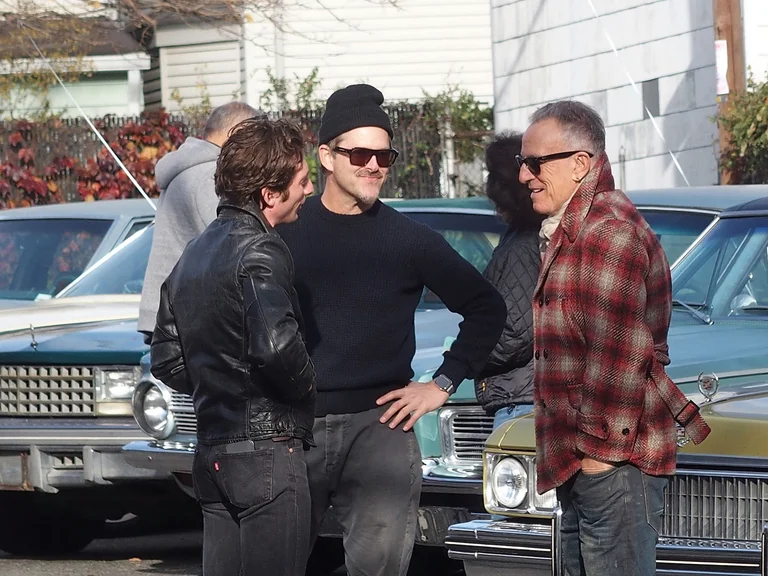
Unlike Bob Dylan, who did not take part in his own biopic, Springsteen has been present, even at festivals, to promote the film, jumping on stage to praise the actors, attack Donald Trump and sing “Land of Hope And Dreams”. He often visited the set, ensuring its authenticity. Actress Odessa Young recalls that it was “amazing” to see Springsteen walk into the legendary Stone Pony club and simply act like a local boy.
Jeremy Allen White as “The Boss”
The lead role went to Jeremy Allen White, star of “The Bear”, whom Cooper calls “one of the greatest actors of his generation”, with a combination of “humility and confidence” that reflects Springsteen himself. The fact that White became an internationally known figure thanks to “The Bear” and his Calvin Klein ads undoubtedly helped the film commercially, too.
But White was not a musician. He spent months taking guitar and voice lessons, thinking that he “would never be able to do it”. After many attempts, he managed to master not only the guitar, but also Springsteen’s distinctive singing style. Still, the biggest challenge was doing it in front of Springsteen himself.
“It’s a huge responsibility to play someone real, especially a living person who is loved by millions. At first, the idea paralyzed me”.
He realized that the only way was to see him not as the mythical Springsteen, but as a young musician, on the brink of worldwide fame, trying to make an album while confronting his past and family relationships.
“At first I almost had to forget him”.
Forgetting was impossible, as Bruce often stood there watching the filming.
“In the first week it was hard to shake the feeling that it was false. But then he became a kind of guide, even in silence, giving us permission to make the film”.
In the evenings, Springsteen sent White messages, complimenting him on small, authentic gestures.
“That gave me a lot of courage”, he says.
The result has been successful: White has been tipped for an Oscar nomination. The film depicts a particular period in the history of pop music – the beginning of the digital age, the birth of MTV and the arrival of the CD – which “Nebraska” challenged with its raw, stripped-down sound.
The legacy of “Nebraska”
By 1984, with “Born in the USA”, Springsteen’s doubts about fame had disappeared: the album became a global phenomenon and turned him into the superstar he remains today. Nevertheless, Zanes says that “Nebraska” has had an extraordinary impact on rock music, paving the way for indie rock and inspiring generations of musicians who worked alone in their rooms.
He sees the album as a timely symbol at a time when technology and social media encourage people to hide every flaw.
“But ‘Nebraska’ says: ‘This is me, here I am, and precisely because of my imperfections, I am closer to the truth of my moment’. It’s a story about 1982, but also about today. I hope the film makes us think about going out into the world a little less perfect, but a little more human.” (The Guardian)








